
French Baked Salmon and Zucchini Ravioles Gratin Recipe
About This Recipe
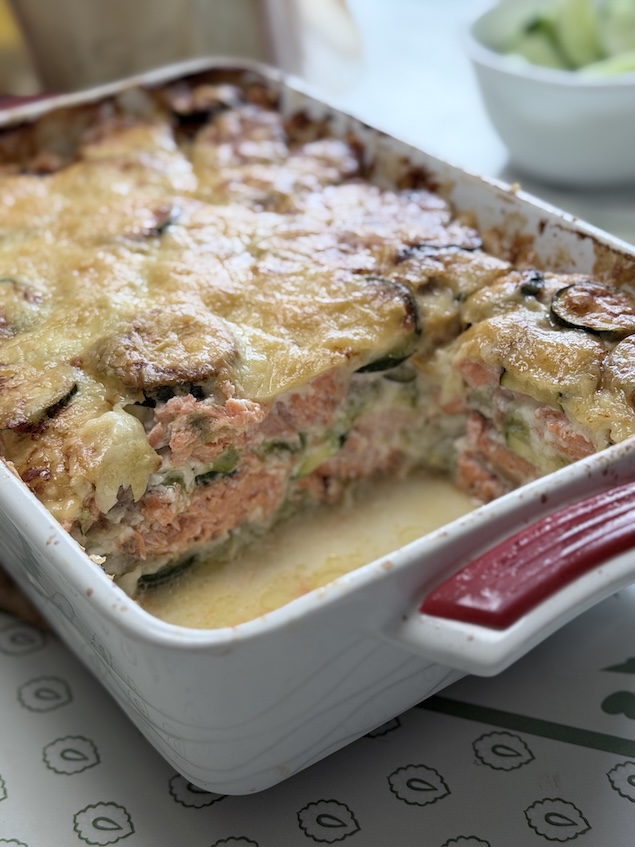
This salmon and zucchini gratin de ravioles is one of our absolute favorite dishes. It is simple to make and is always a crowd pleaser. It is a fresh, sophisticated, and a unique take on the usual baked pasta dish or casserole recipe.
I fell in love with this recipe the first time I tried it in France with my family. Now whenever we go back, we have it at least once. It is a home cooked meal that is hearty and comforting.
Back in the United States, we have served it at dinner parties and even brought it to potlucks. Everyone who has tried it has loved it and it is such a new and unique dish that many people have never heard of.
I think it is also a great recipe for sneaking in fish and vegetables for children.
We once served it to a friend who is known to be a great cook with a refined palate and he said, “I usually don’t go for seconds but this time I will!”.
Why You’ll Love This Recipe
- High in protein and omega-3s
- A lighter twist on traditional gratins and casseroles
- Easy to prep ahead and bake when ready
- Delicious balance of creamy, comforting, and fresh flavors
- Great way to get kids to eat fish and vegetables
- Great Fish Friday dish for hosting guests
Ingredients
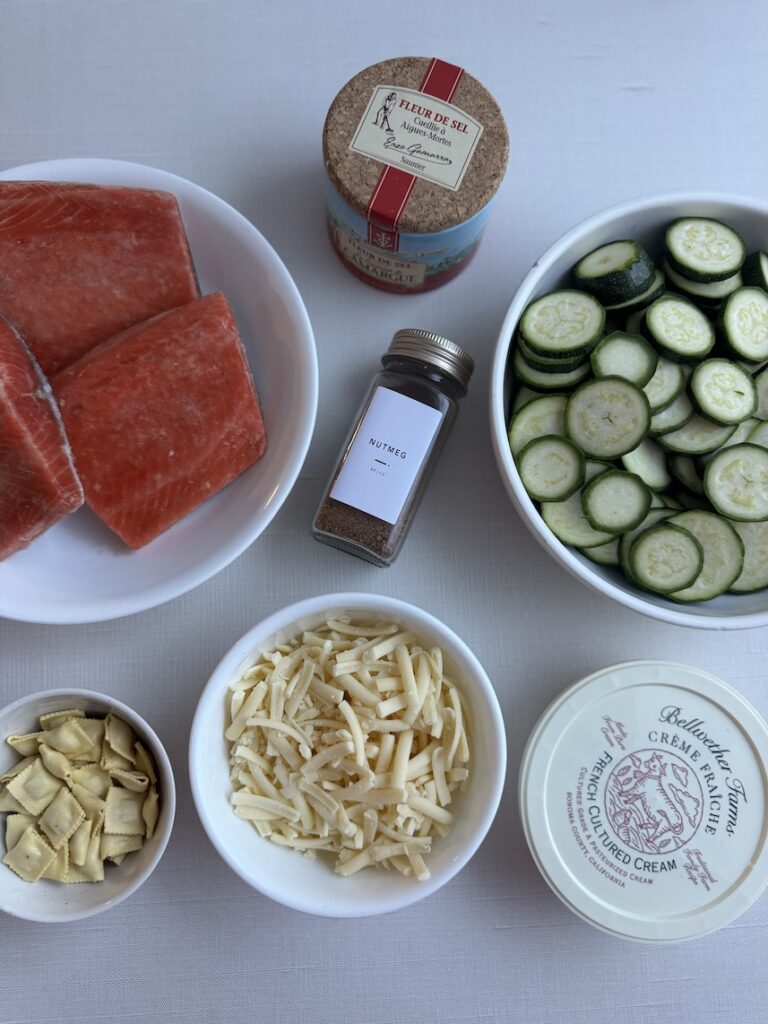
- Cubed salmon pieces
- Zucchini slices
- 1 packet of ravioles du dauphiné or 1 box of mini raviolis/ravioletti
- Crème fraîche
- Shredded gruyere cheese or other hard mild white cheese
- Nutmeg, salt, and pepper
Ravioles du Dauphiné
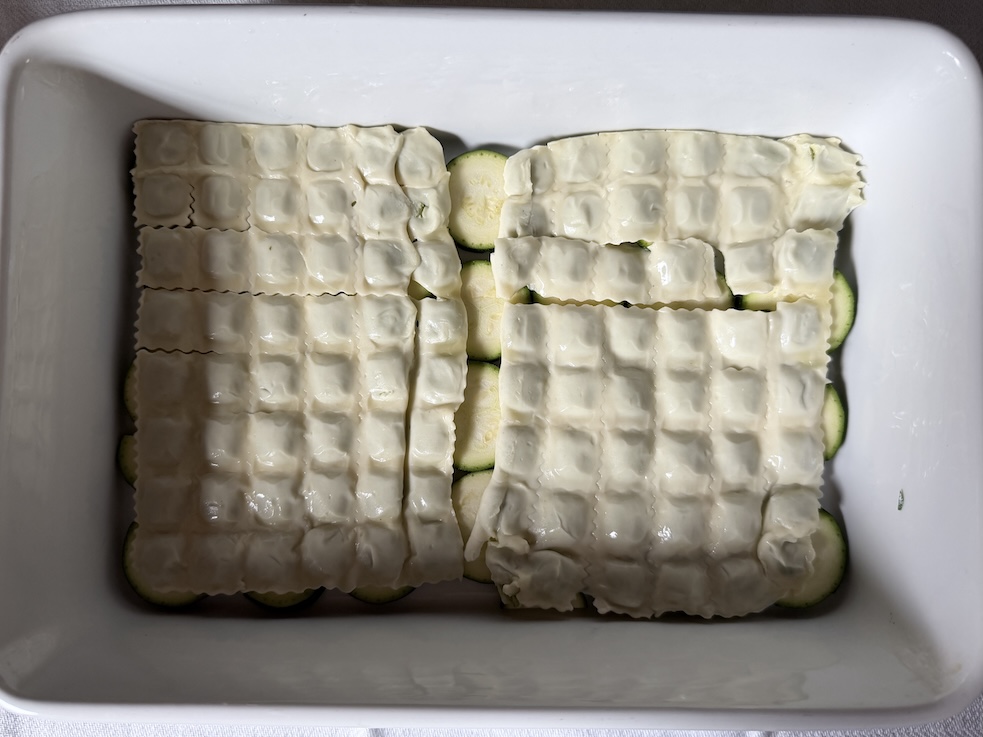
Typically, we’d make this dish with ravioles du Dauphiné, a specialty from the Dauphiné region of southeastern France that’s similar to Italian ravioli, with a few key differences. Rather than individual pasta pockets, ravioles come in sheets of tiny connected ravioli.
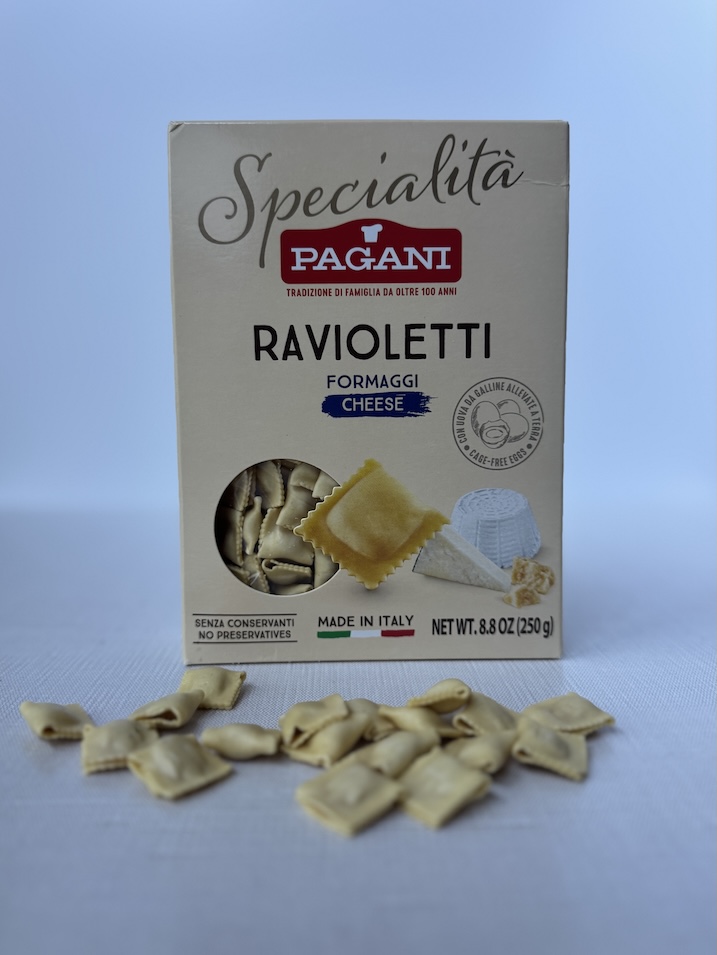
Since it can be difficult to find in the U.S., I’ve swapped in boxed mini raviolis, which captures a similar texture and taste while keeping the recipe easy to make at home in the United States. Trader Joe’s used to sell dried mini ravioli years ago but no longer do. I’m hoping they will start again. However, we were able to find some on Amazon here.
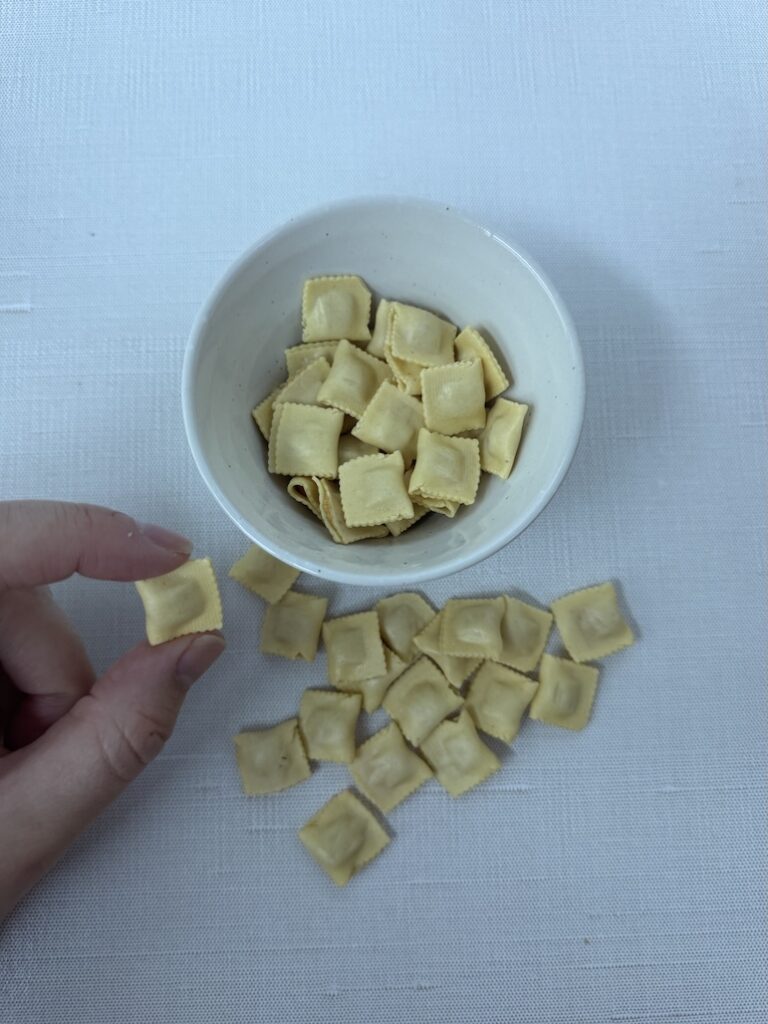
This is what the layer of mini ravioli will look like if you are going that route:
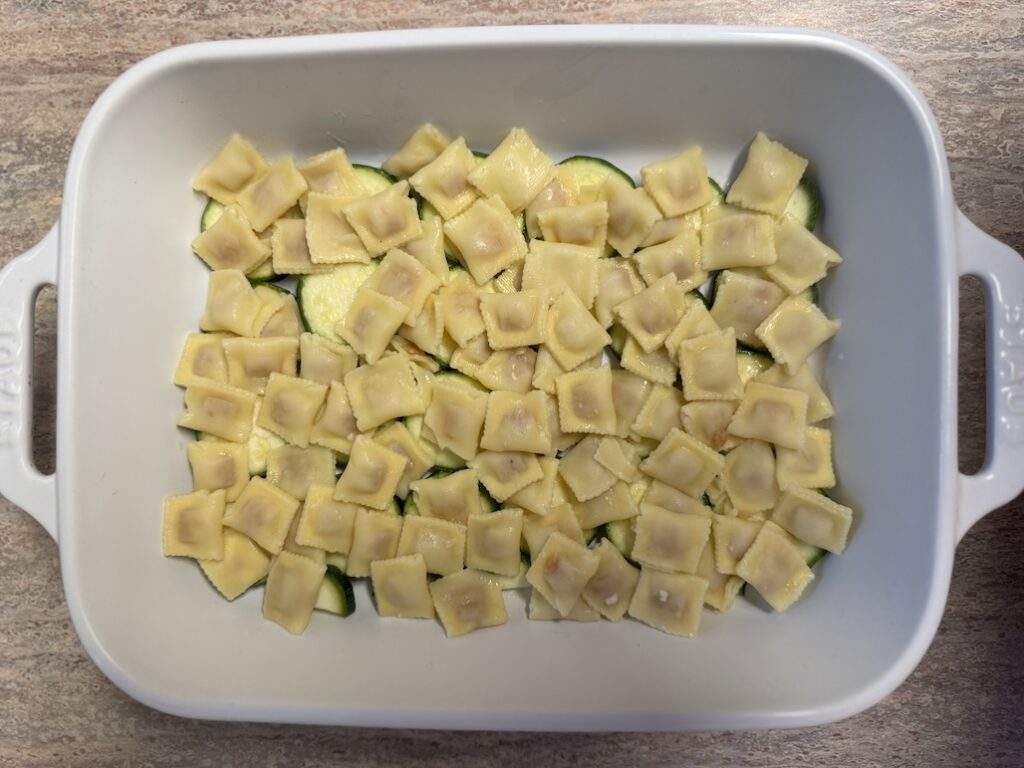
Ravioles du Dauphiné on the other hand are thin perforated sheets made up of about a dozen small squares of ravioli so they are perfect for layering. They’re often made with mild and soft cheeses which adds to the creaminess of the dish. They come in a variety of creamy fillings such as goat cheese, mushroom, or herbs de provence. We like the emmental ones for its mild flavor.
The dough is thin and delicate so you don’t even have to cook them ahead of time if using ravioles du Dauphiné. You can easily find them in French grocery stores in the refrigerated aisle.
When we bring them back from France, we would freeze them and then thaw them overnight in the fridge whenever we were ready to use them.
Crème fraîche
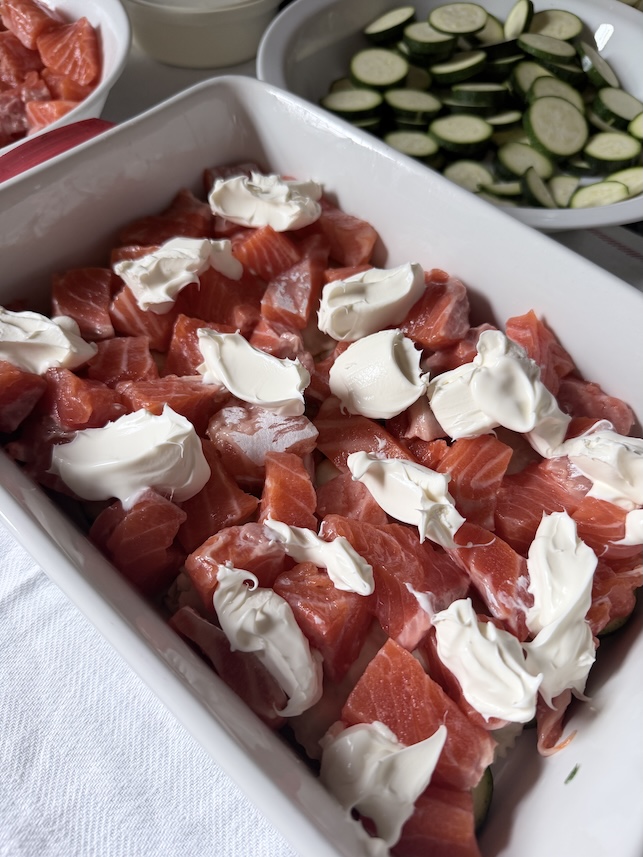
Creme fraiche is a thick cultured cream from France and is a lot like sour cream except it is richer, creamier, and less sour.
They used to be a lot harder to find but in recent years we’ve easily found them at Trader Joe’s, Whole Foods, and for the best price, Costco sometimes carries it in the cheese section.
Creme fraiche is a staple in French cuisine and is sold in many variations in France. The one our family often uses back in France comes in a bottle and is more liquid than what you’d find in the US. However, either works just as great.
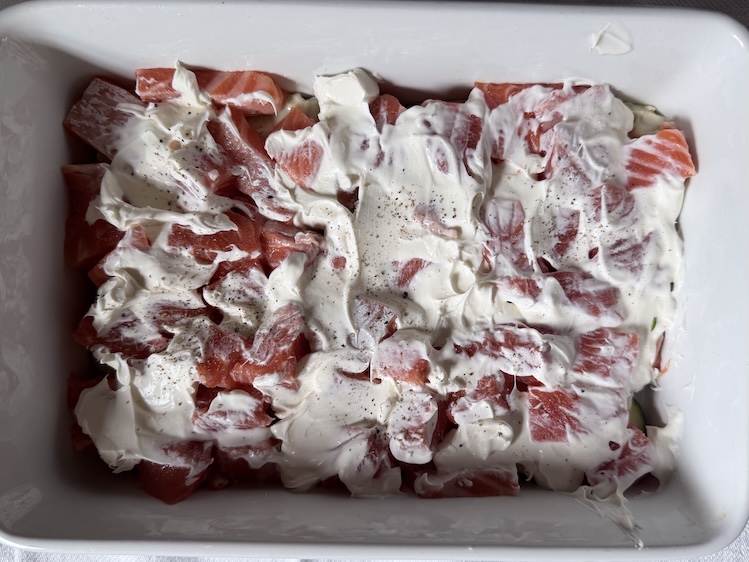
With the creme fraiche, it is important that when layering, you put this on after the salmon layer. That way it keeps the salmon moist during the baking process. Creating dallops of it throughout the dish also makes it easier to spread for an even layer.
Another important tip to remember is to not overdo it with the creme fraiche since it can make the dish too rich.
Salmon Fillet
We like to use wild caught Alaskan salmon for its cleaner and better quality. We often buy the frozen filets from Costco and use 2-3 filets each time we make this dish. You are welcome to use more, if you prefer.
The trick to easily remove salmon skin is to remove it when the salmon filet is still slightly frozen. If you’re using fresh unfrozen salmon filets, just pop them in the freezer for about 20-30 minutes before removing the skin.
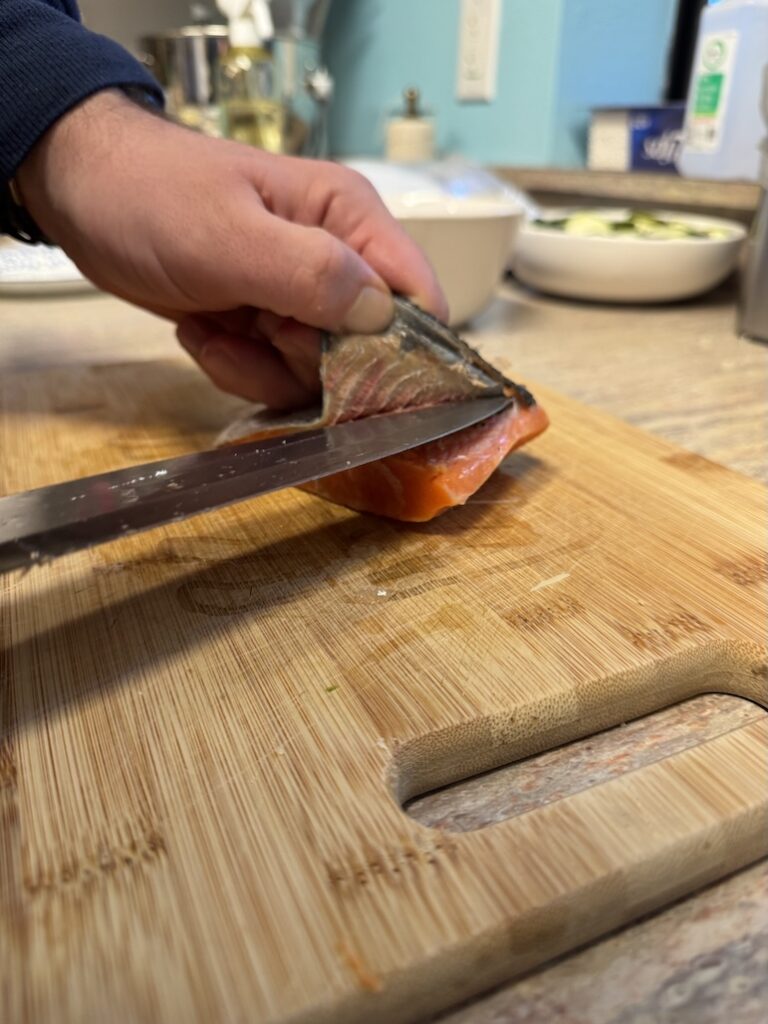
This helps the skin come off cleaner and is more easily separated from the fish meat. If it is too thawed, a lot of the fish meat comes off with the skin and it easily tears as you’re removing it.
Another trick I’ve learned to help with the slippery skin is to use a paper towel to hold onto the skin portion with. It adds friction so your hand isn’t constantly slipping off from the skin during the removal process.
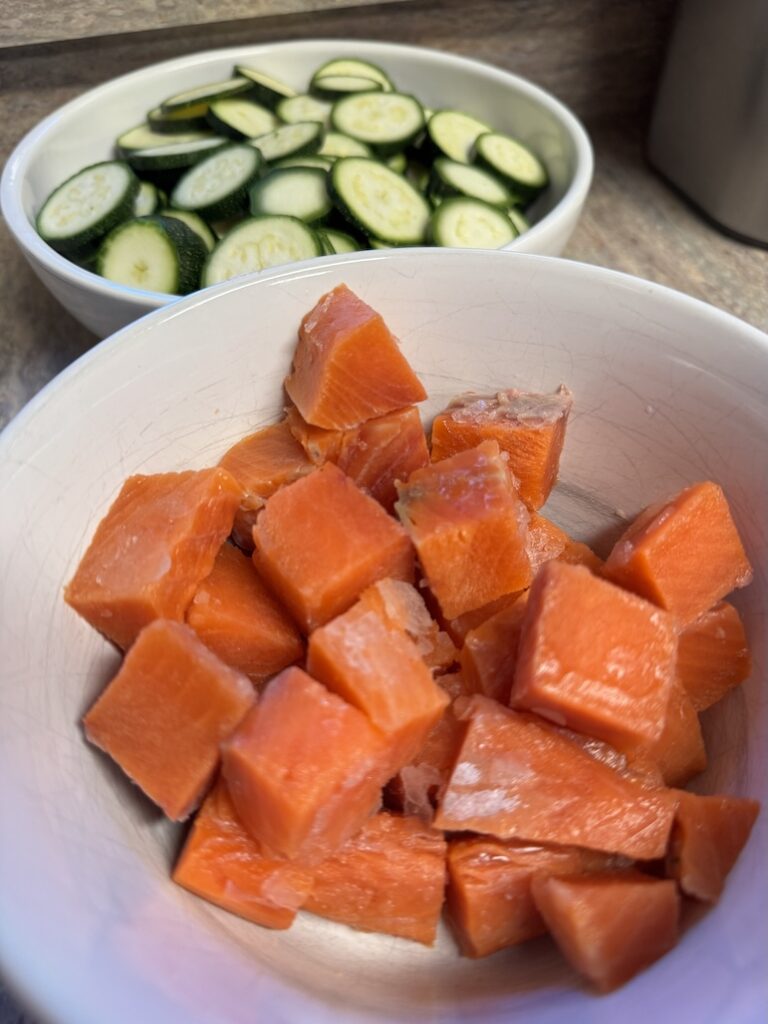
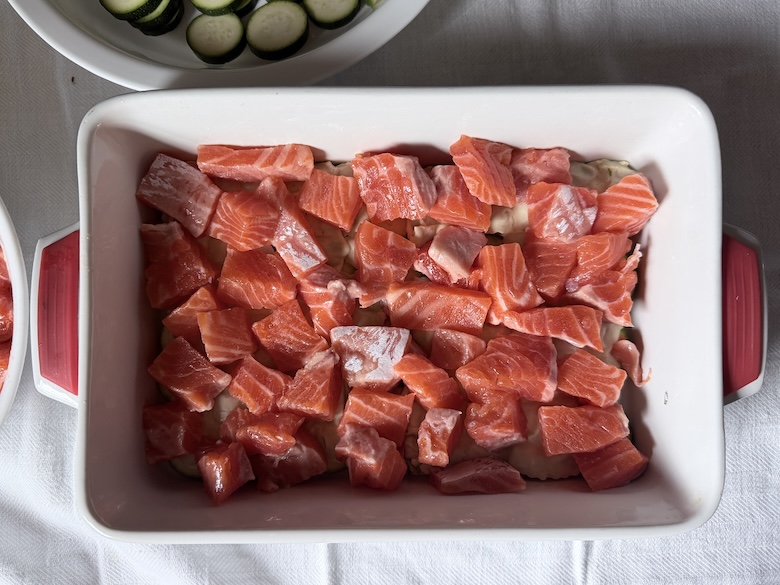
Once the skin is removed, cut the salmon into 1 inch cubes and set aside for layering.
How to Serve
This dish is a main entrée that can be prepped ahead of time or the day of. Just prepare it as usual and then put it into the refrigerator until you are ready to bake it just before serving.
This salmon and zucchini recipe is great on its own as a main course. However, some great side dishes to go with this are a light green salad or carrot rappée.
Serve it all with some fresh baguette and a nice glass of white wine and you have yourself a simple and delicious homemade French meal.
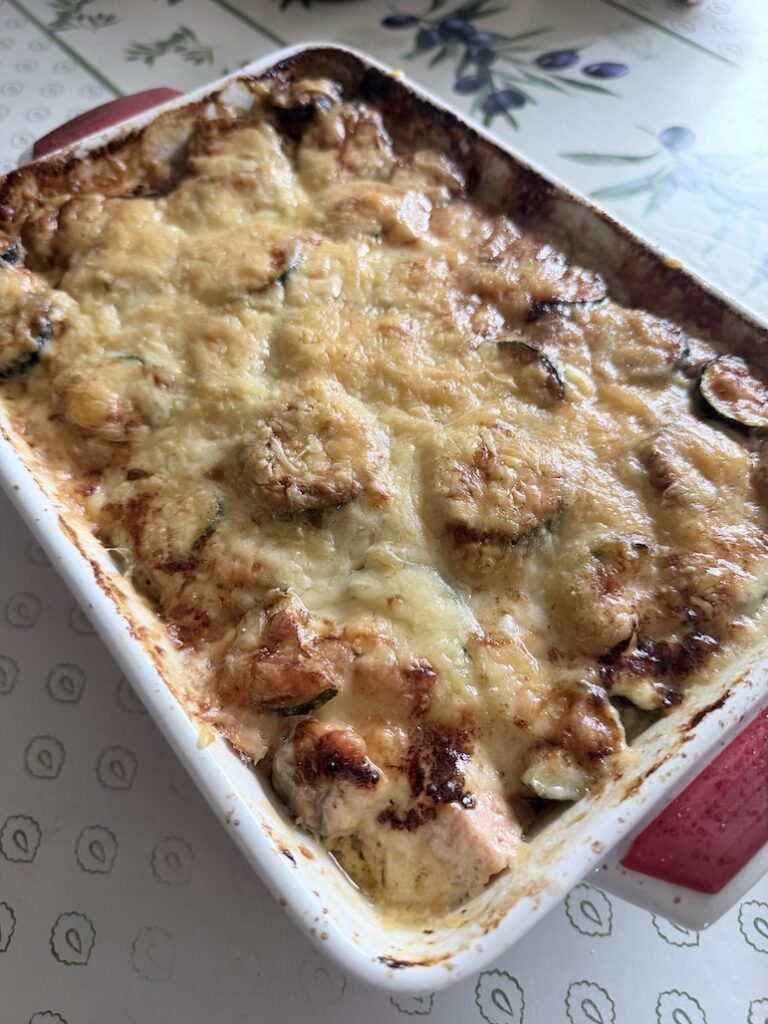
Baking Vessel
Anything that is oven safe would work. I’ve used a 10 inch cast iron pan and 9×13 inch glass/ceramic baking dishes and all have worked just fine.
How to Make the Salmon Zucchini Gratin
Tips & Variations
- Prep ahead: Assemble up to 24 hours in advance. Refrigerate and bake right before serving.
- When removing skin from salmon, we find it is easiest when the salmon is slightly frozen.
- For frozen salmon filets: Remove it from your freezer and let it thaw on the countertop for about an hour before prepping.
- For fresh salmon filets: Put it in the freezer for about 20-30 minutes before removing skin.
- Make sure the creme fraiche is always layered on right after the salmon cubes. This ensures the salmon remains moist.
- When it comes to the layer of creme fraiche, dallop the creme fraiche throughout the dish before spreading. This makes it easier to spread an even layer throughout.
- You can replace gruyère with more mild cheeses such as sharp cheddar, emmental, or parmesan cheese if you have pickier eaters.
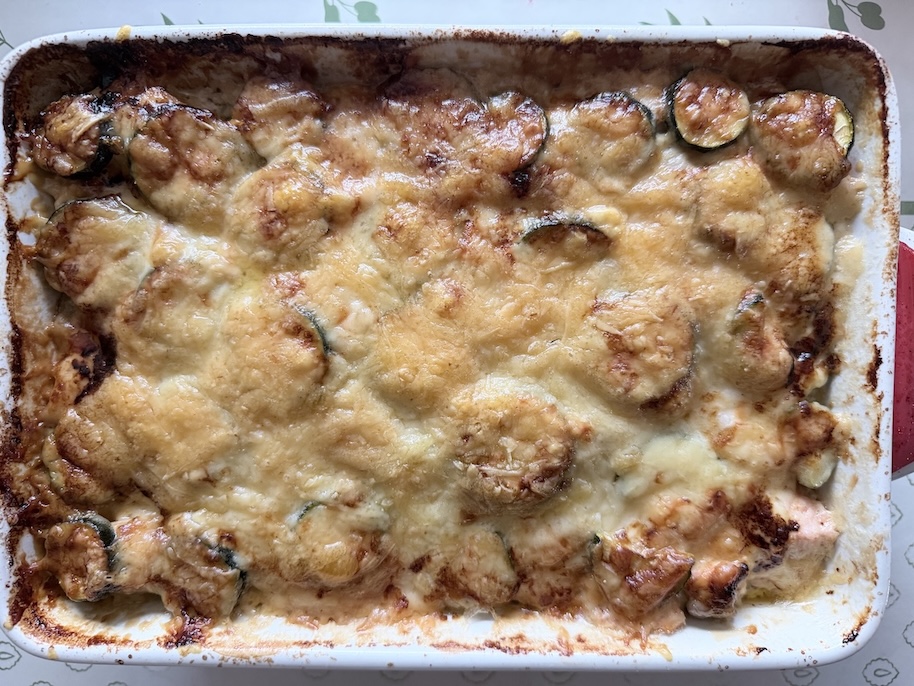
- The zucchini slices should be cooked through and soft. If it comes out too firm, just put it back in to bake a bit more.
- Make sure you leave enough time before serving to let it cool at least 20 minutes before serving.
Recipe
French Baked Salmon and Zucchini Ravioles Gratin
Equipment
- 1 9 x 13 inch oven safe baking dish or cast iron pan
Ingredients
- 1.5 – 2 pounds of salmon fillets
- 3 – 4 medium-sized zucchini sliced ⅛ inch thick
- 1 packet of ravioles dauphine (240g) or 1 box of mini raviolis/ravioletti (250g)
- 12 oz of creme fraiche
- 8 oz of shredded gruyere cheese or other hard mild white cheese
- ⅛ teaspoon of nutmeg
- 2 teaspoon of kosher salt divided
- ½ teaspoon of black pepper
Instructions
- Preheat your oven to 400°F (205°C).
- Cook the mini raviolis until just al dente – about 1 minute less than the package recommends. They’ll finish cooking in the oven. Skip this step if using ravioles.
- Once they are done, drain them and coat them with enough olive oil so they do not stick together.
- Spread them on a plate or tray to cool slightly while you prepare the rest of the dish.
- If using ravioles, you can skip the boiling step completely. It will cook in the oven.
- Prepare zucchini by slicing them into ⅛ inch slices with a knife or a mandoline slicer, pat to dry.
- For the salmon filets, remove any skin that is on them and then cut into 1 inch cubes – this ensures they are cooked evenly while baking.
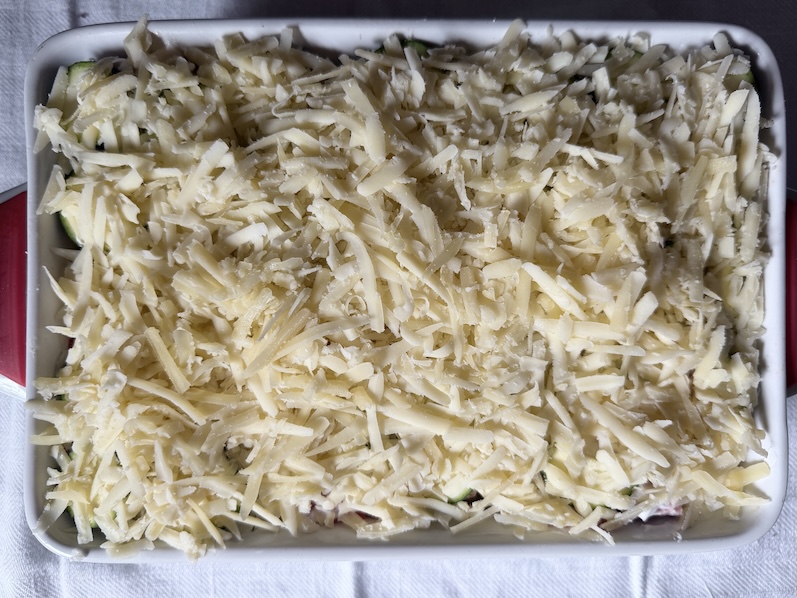
- Grate the white cheese using the large holes of a box grater.
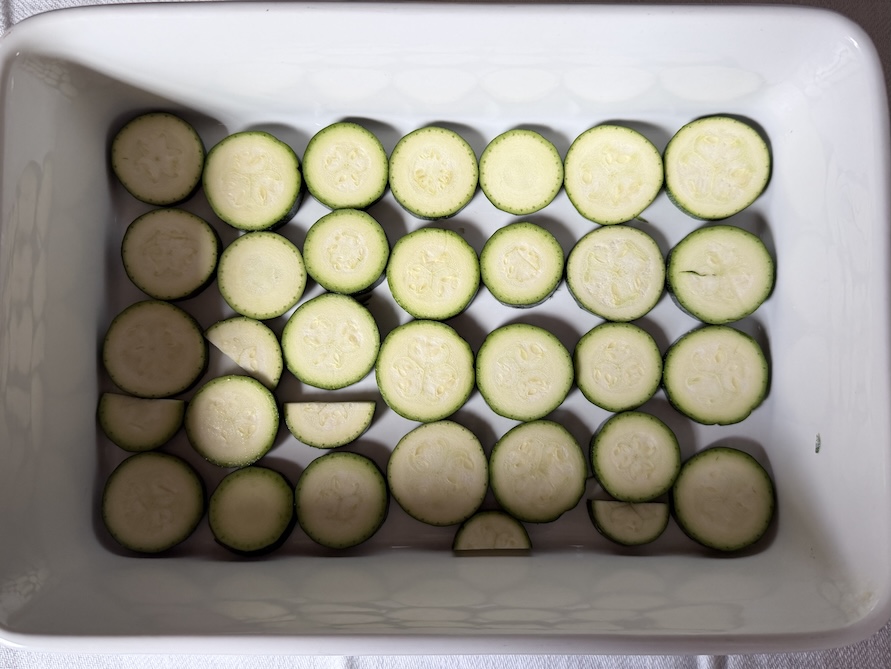
- Once all your ingredients are prepped, in a heavy large skillet or large baking dish, assemble the ingredients in the following layers: zucchini slices, ravioles or mini ravioli, ½ the salmon cubes, followed by creme fraiche. After each layer of creme fraiche, sprinkle a pinch of salt, pepper, and a tiny bit of nutmeg.
- Make sure you go in this order because you want the creme fraiche to be on top of the salmon while baking. This keeps it from drying out during the cooking process.
- Repeat layers one more time using up the remaining half of the salmon cubes.
- After the last layer, you should end up with creme fraiche on top. Do one additional layer of zucchini slices with whatever is remaining. Don’t worry if this layer of zucchini doesn’t cover the dish evenly.
- Top the entire dish with the grated cheese of your choice (gruyere, white cheddar, parmesan, etc.)
- Bake for 40-45 minutes until golden brown on top and bubbling.
- Turn on your broiler to high for 2-3 minutes to further brown the top layer of cheese if you’d like to add more flavor and texture to your dish. Usually, it would come out already browned enough so this step is only if you’d like to brown the cheese layer some more.
- It will come out piping hot so let it cool for at least 20 minutes to let the dish set a bit before serving. Serving too soon out of the oven results in it not holding its structure.
Notes
- Prep ahead: Assemble up to 24 hours in advance. Refrigerate and bake right before serving.
-
When removing skin from salmon, we find it is easiest when the salmon is slightly frozen.
- For frozen salmon filets: Remove it from your freezer and let it thaw on the countertop for about an hour before prepping.
- For fresh salmon filets: Put it in the freezer for about 20-30 minutes before removing skin.
- Make sure the creme fraiche is always layered on right after the salmon cubes. This ensures the salmon remains moist.
- When it comes to the layer of creme fraiche, dallop the creme fraiche throughout the dish before spreading. This makes it easier to spread an even layer throughout.
- You can replace gruyere with more mild cheeses such as sharp cheddar, emmental, or parmesan cheese if you have pickier eaters.
- The zucchini slices should be cooked through and soft. If it comes out too tough, just put it back in to bake a bit more.
- Make sure you leave enough time before serving to let it cool at least 20 minutes before serving.