Lyon, France Travel Guide: Best Things to See & Do
We recently got to visit Lyon, France this past winter and absolutely fell in love with France’s third largest city which is located in the Auvergne-Rhône-Alpes region in east-central France. We were there for 3 days and 2 nights and were able to discover much of this beautiful city.
Lyon carries titles such as “la Ville des Lumières” (the City of Lights) and the “World Capital of Gastronomy”. The latter may be subjective depending on who you ask, but there’s no denying that Lyon has an exceptional food scene.
Regardless, we really enjoyed our time in Lyon and find that it is a city worth visiting if you ever make it to France and are looking to visit another city outside of Paris.
From its past as a powerful Roman city to its many Unesco World Heritage Sites, this is a great place to steep yourself in history and local culture. It’s great for a first-time visitor to France, and very accessible from other parts of France by train, plane and car.
In Lyon, the people are generally friendly and the atmosphere is calmer and slower than Paris. Lyon is the perfect place to visit if you are looking for a little change of pace but still want to discover all the beauty that French cities have to offer.
The smaller city also makes it easier to get around and rediscover things again if you didn’t think the first time was enough (we went to Notre Dame de Fourvière twice!).
We’ve curated a guide with the help of a Lyon local that details some of the best places to check out in Lyon so continue reading to discover tons of great recommendations. We also have this post featuring must-try restaurants and eateries in Lyon.
We have yet to discover all of Lyon but we definitely will visit the hilly city again. After all, it became one of my personal favorite cities in the world after my first trip.
Getting to and Around Lyon
As mentioned above, Lyon is located in east-central France in the Auvergne-Rhône-Alpes region. It is just shy of 5 hours from Paris if you are going by car. Most of the streets are metered parking but they have a great app you can use to pay from your phone from anywhere in the city called “Easypark”. It makes it very convenient to add more time if needed while you’re exploring without having to go back to a pay station.
However, the best way to explore Lyon, if you are a tourist coming from elsewhere, is by taking the high speed train (TGV). The ride is only 2 hours and takes you directly to the Lyon train station.
Once you’re there, everything is quite accessible by walking or by taking public transport. For touring around for the day, we suggest you get the day pass so you can take full advantage of exploring the entire city.
Must Visit Places in Lyon, France
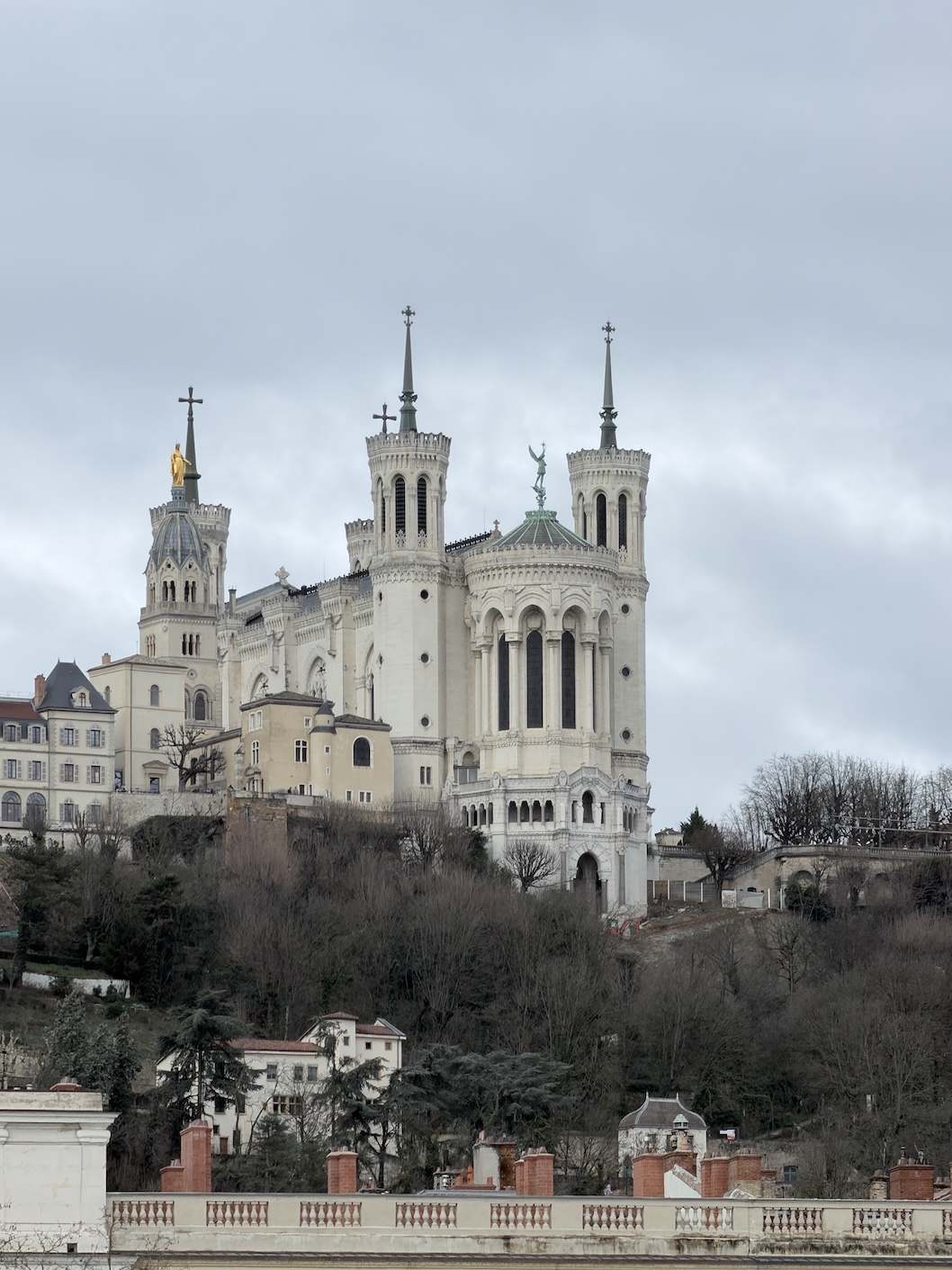
Notre Dame de Fourvière Basilica
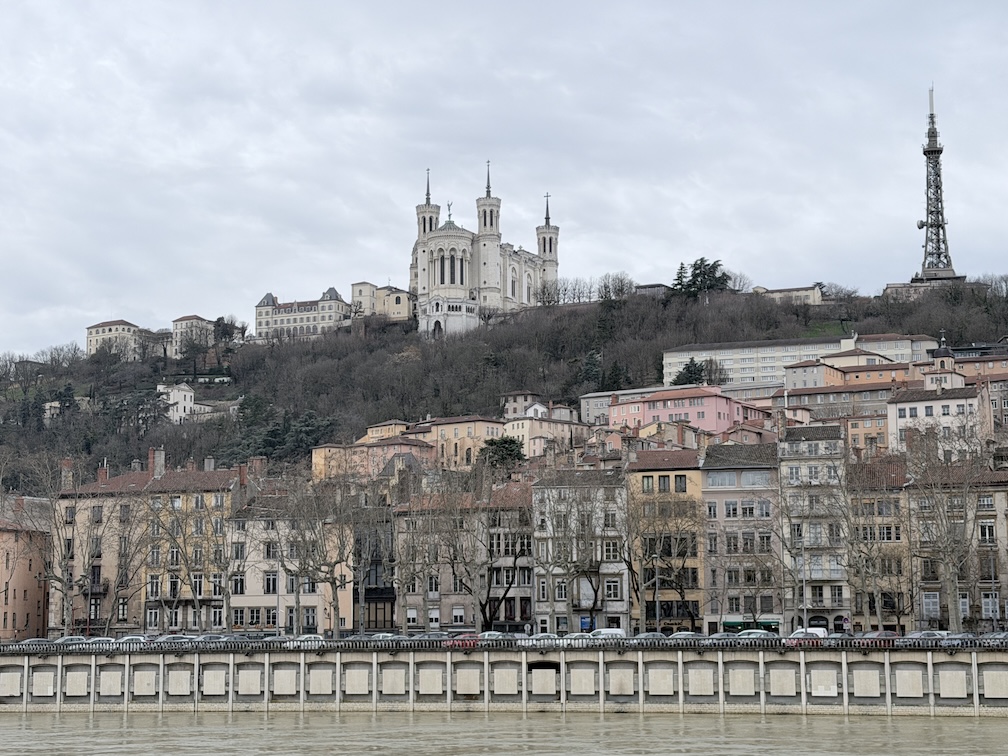
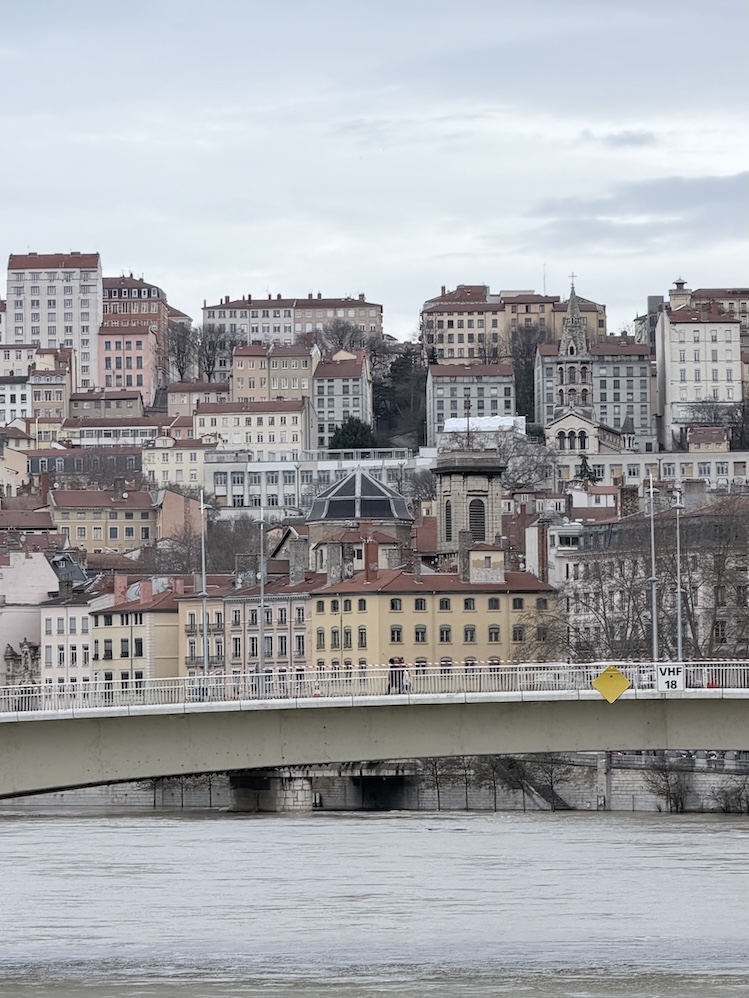
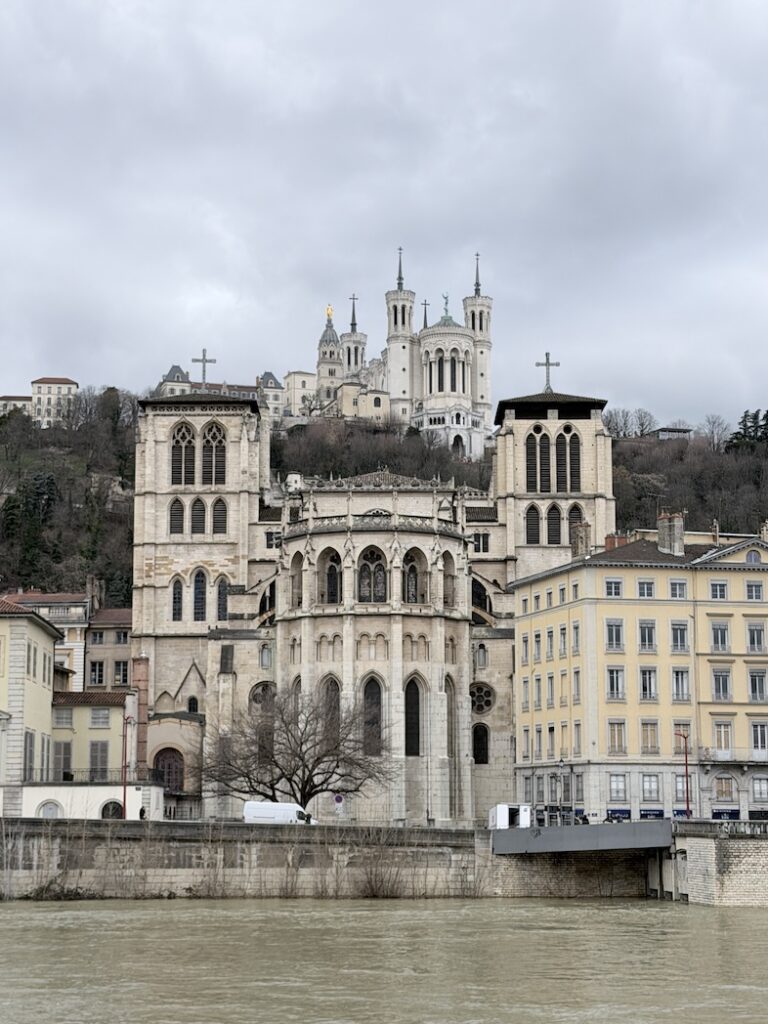
It seems as though you cannot walk around Lyon without seeing this beautiful landmark sitting atop the highest vantage point of Lyon on Fourvière hill. This basilica was built for Our Lady back in the late 1800s.
Its prominent location makes it the perfect place for the gold-gilded statue of Mary that crowns one of the basilica’s towering domes, overlooking the city as its guardian.
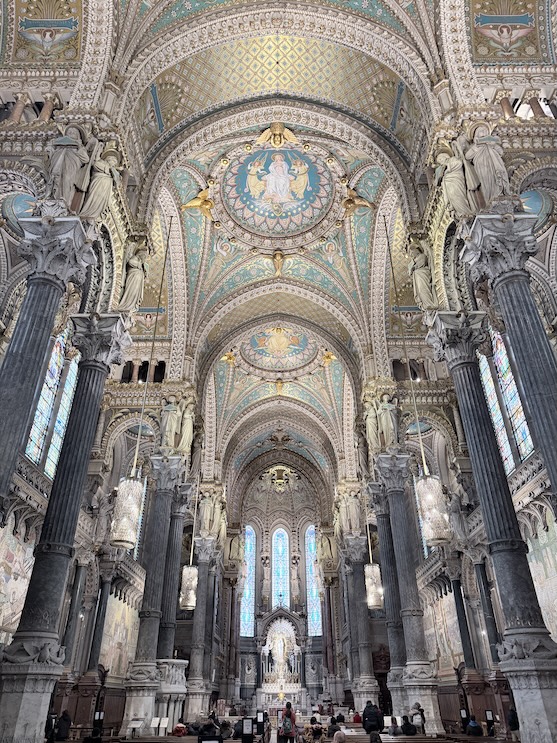
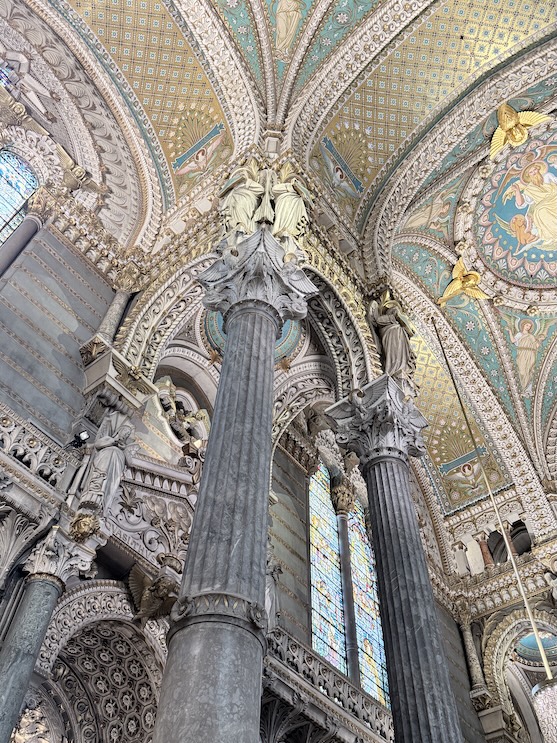
This basilica was designed with a blend of romanesque and byzantine styles. The interior took me by surprise and is absolutely breathtaking with its intricate designs and mosaics. Its interior design is mostly ivory, gold, and of course the Marian blue in honor of Mary.
You can read more about the majestic building and its history here.
 Basilica of Notre Dame of Fourvière
 Basilica of Notre Dame of Fourvière Interior
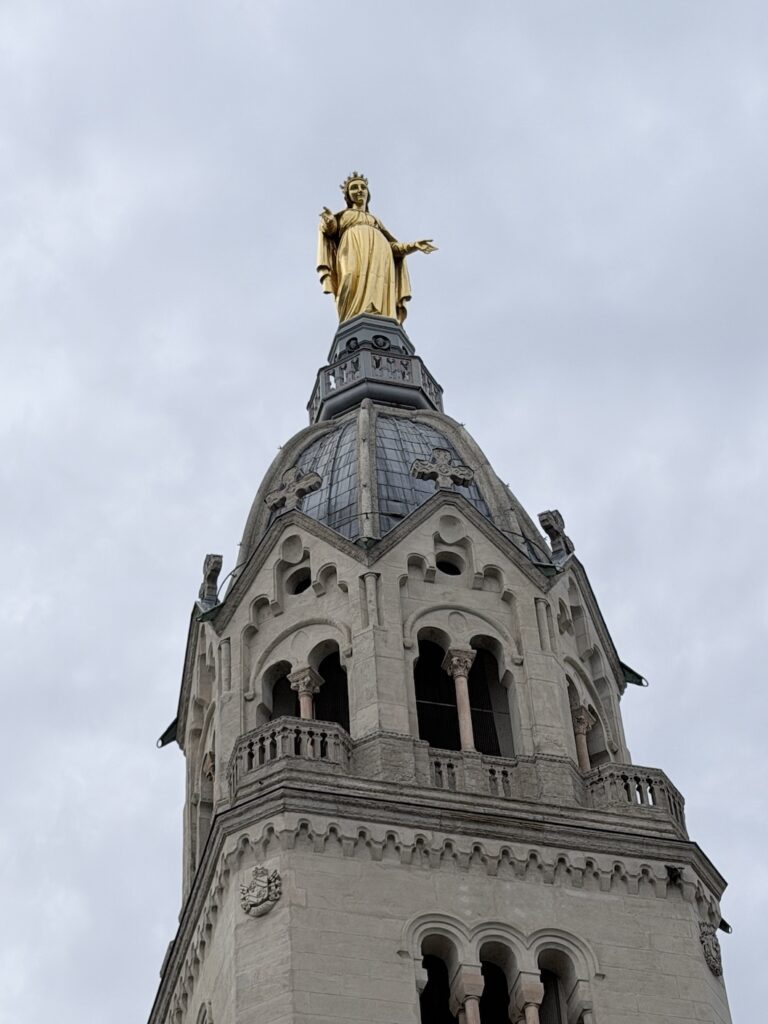 Our Lady of Fourviere
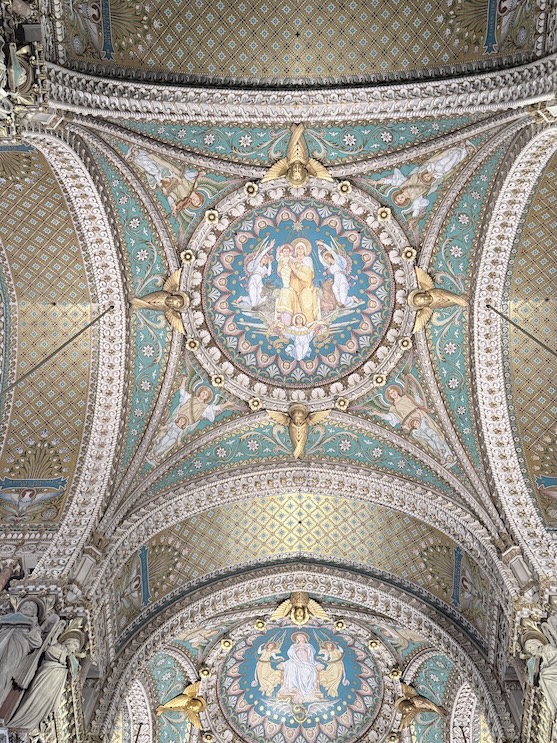 Basilica of Notre Dame of Fourvière Mosaic Ceiling
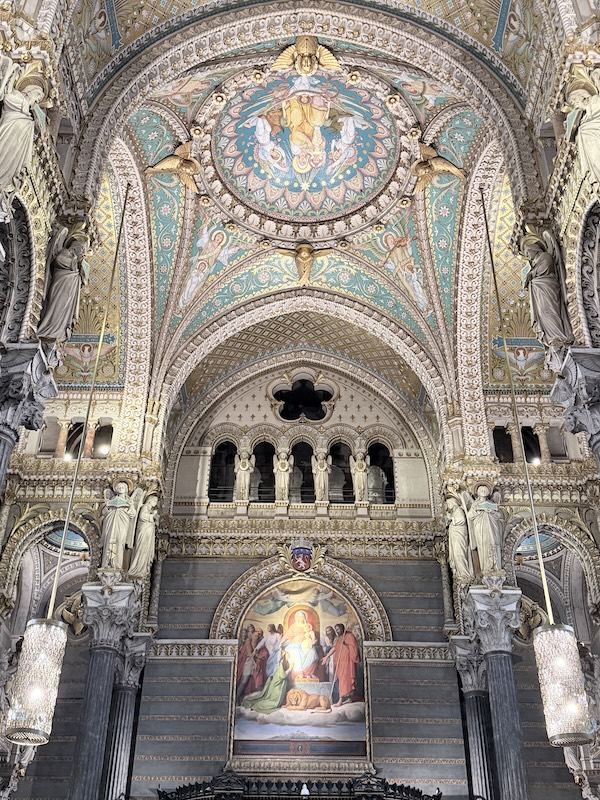 Basilica of Notre Dame of Fourvière
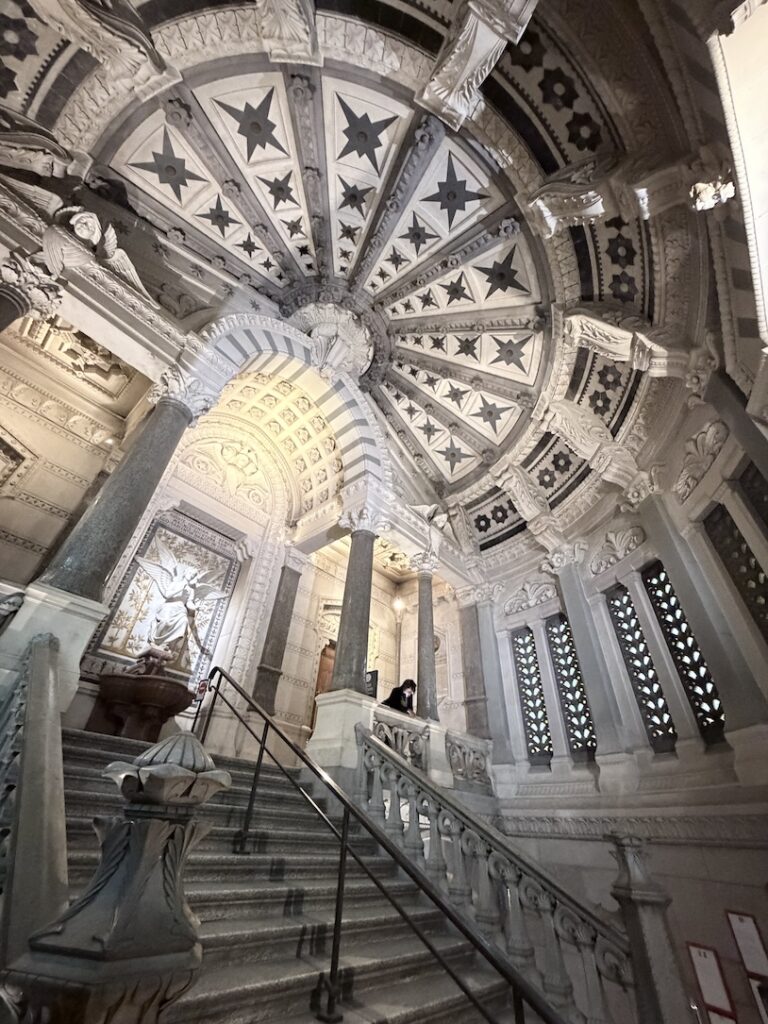 Basilica of Notre Dame of Fourvière Crypt
St. Joseph’s Crypt
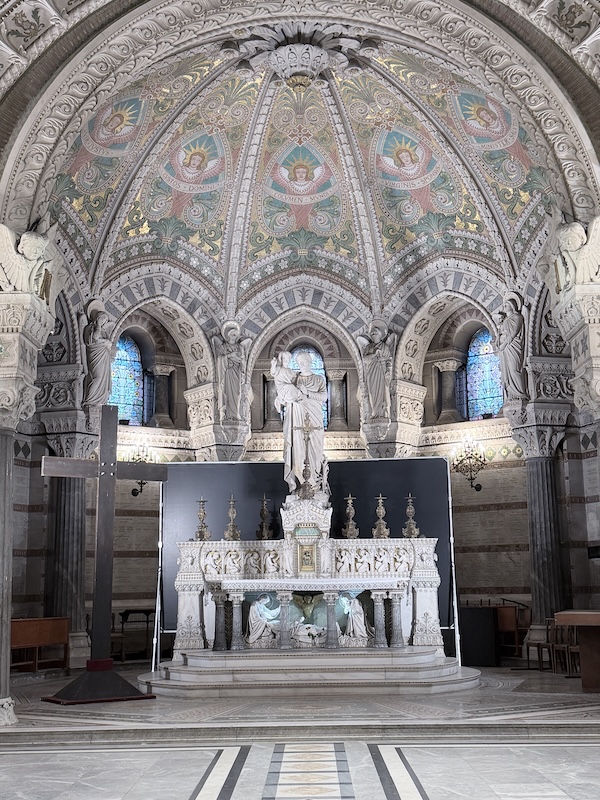
Below the main church is a magnificent crypt dedicated to the spouse of Mary, St. Joseph. Here, you’ll find statues of the Virgin Mary from all over the world. During our visit, there was also a fascinating display about the Shroud of Turin.
We learned new details that reveal the depth of Our Lord’s suffering during His Passion. The exhibit explained how the wounds visible on the cloth, including a swollen face and a broken nose, marks consistent with severe Roman scourging, the impressions of a crown of thorns, and crucifixion wounds suggesting the nails were driven through the wrists rather than the palms, closely correspond with the sacred accounts of Scripture. The legs also do not appear to have been broken, in keeping with what is recorded in the Gospels.
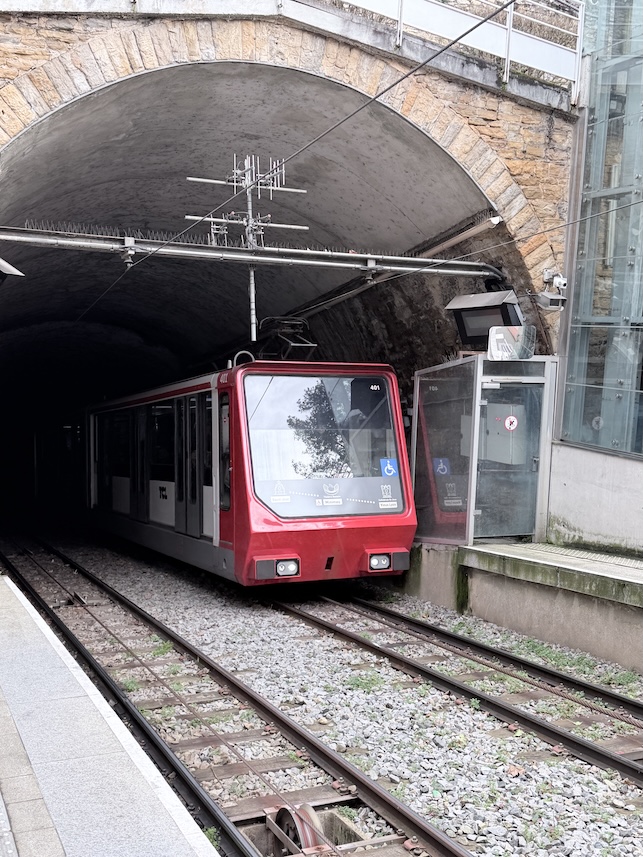
Getting to Notre Dame de Fourvière
Getting to the Notre Dame de Fourvière is easy if you’re taking the metro, which then connects you to a smaller trolley (funiculaire in French) that takes you directly to the front of the basilica.
If you decide to walk to the basilica, be prepared for an uphill climb. It’s a short trip on the way down.
Fun fact: The exterior of Notre Dame des Victoires Catholic Church in San Francisco was inspired by this basilica. Check out this post to see it for yourself.
Place Bellecour
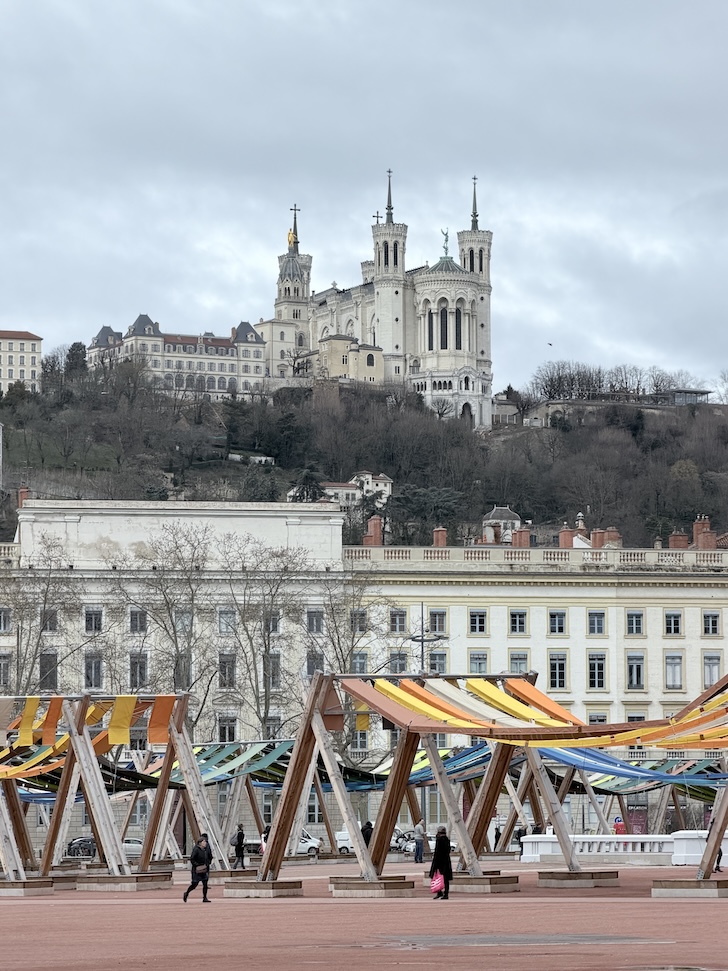
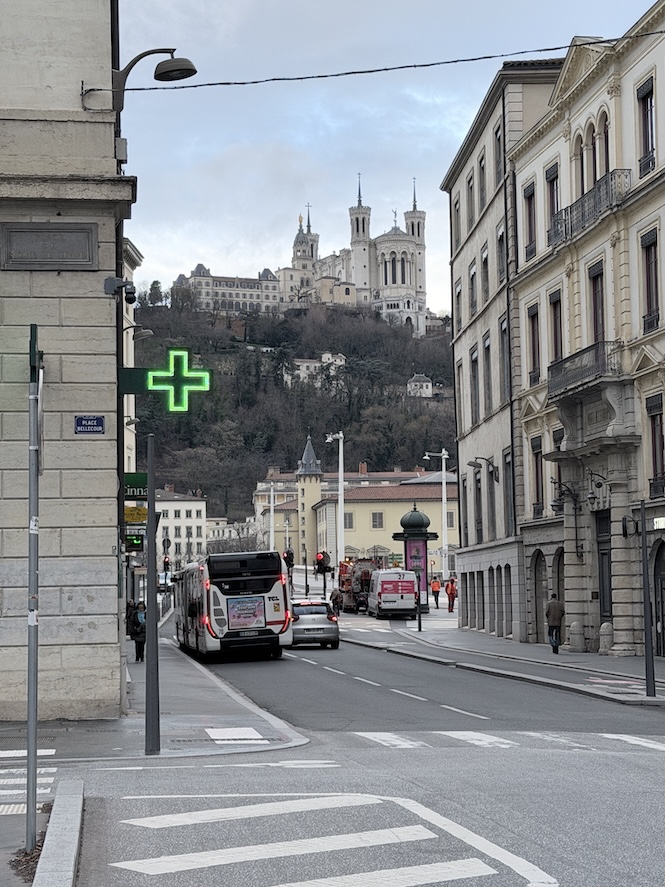
Bellecour Plaza is known to be one of the largest plaza in Europe. Being centrally located on the peninsula of Lyon known as the Presqu’île (almost island) and also for being one of the largest plazas, it is often considered to be the city center. Place Bellecour is a great starting place to begin your journey around the city.
From there, you get a great panoramic view of Lyon’s hills which includes the Fourvière hill with the beautiful Notre Dame de Fourvière Basilica in a prominent position at the top.
Around the square are shops and eateries, an excellent place to buy a quick souvenir or food.
In the plaza is a huge ferris wheel as well as a giant artwork known as the urban weaving, which actually looks relatively nice against the classic french style buildings of Lyon.
I usually don’t like it when modern and abstract art is added to old style European buildings, which alone are beautiful enough, but this one complemented it. Usually the contrast is just too jarring.
Vieux Lyon and Cathedral St. Jean
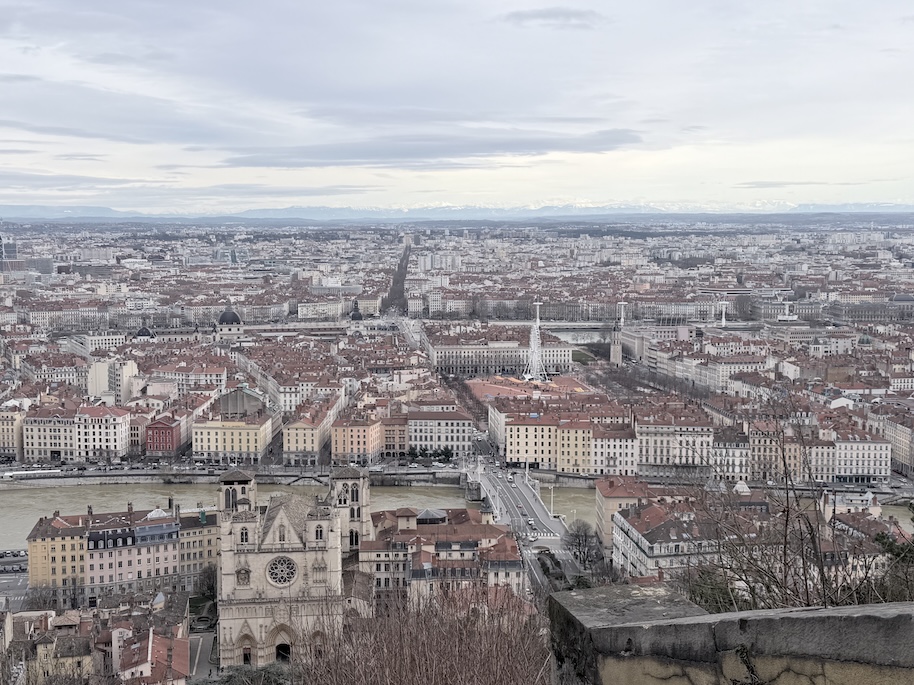
Vieux Lyon, which translates to Old Lyon is the old neighborhood of Lyon and features some of the best preserved renaissance buildings.
The old town is where you’ll find little secret passages between streets called traboules. If you can find them, they are some of the must see sites of Lyon. We haven’t had a chance to walk through these yet but it’s on our next Lyon bucket list!
Also in Vieux Lyon is the Cathédrale St. Jean or in English the Cathedral of St. John the Baptist, which holds the seat of the Archbishop of Lyon. This cathedral features romanesque and gothic styles. The back of the cathedral, which is equally as beautiful as the front, is seen from across the Saône river if you are on the left bank.
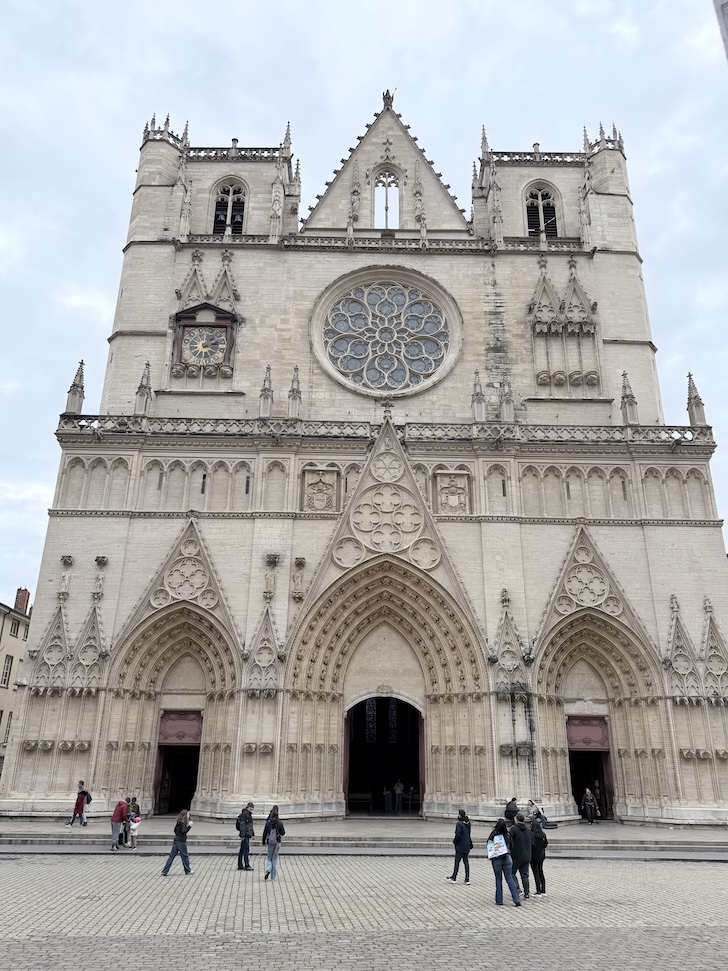
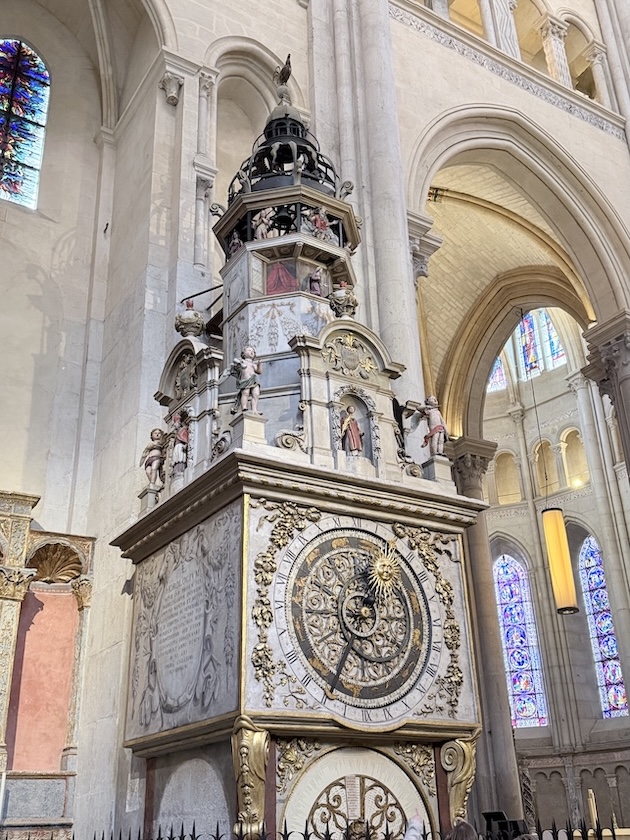
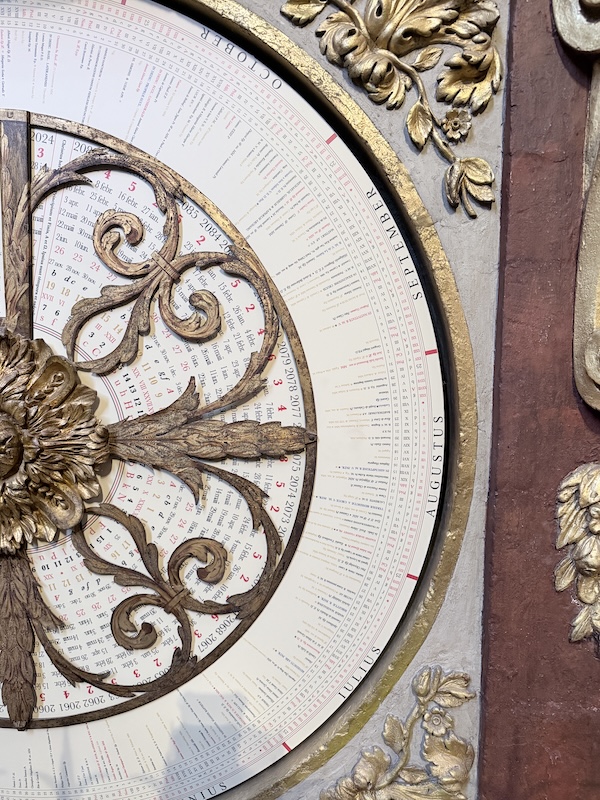
The cathedral has an astronomical clock which dates back to the 14th century. During certain hours of the day the clock would do a little dance. I especially loved seeing various saints’ feast days listed on the clock.
The clock has been updated since the 14th century, we saw newer saints such as St. Paul Miki’s feast day listed on the calendar portion of the clock. We have a special devotion to him since we were able to visit the site of his and his companions’ martyrdom in Japan. You can read all about it here.
Near the entrance into the cathedral, there is a sign letting visitors know that a treasure room can be found up a flight of stairs.
It is worth checking out for its remarkable collection of sacred art, intricately carved ivories, medieval silverwork, historic tapestries, and beautifully preserved liturgical vestments from the Byzantine era to the 19th century. It also houses relics of Our Lord and other saints, including relics of St. Irenaeus of Lyon, one of the city’s most important early Christian figures.
Roman Forum
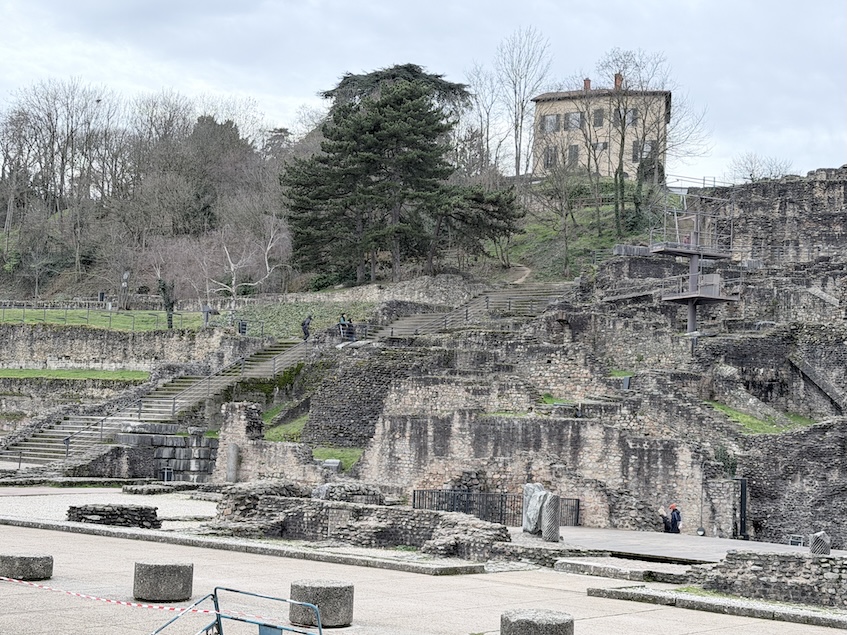
A little down the hill from the Basilica of Notre-Dame de Fourvière are the ancient ruins of the Théâtre Gallo-Romain de Lyon. This massive amphitheater, dating back to around 15 B.C., was used by the citizens of Lugdunum. It was an important city and the capital of the Three Gauls, during Roman times.
The “Three Gauls” referred to the Roman administrative regions of Gallia Lugdunensis, Gallia Aquitania, and Gallia Belgica, which were governed from Lugdunum. The theater could hold up to 10,000 spectators for theatrical performances, music, and public events, and remains one of the best-preserved Roman sites in Lyon, offering a fascinating glimpse into the city’s ancient past.
The roman ruins are open to the public free of charge, Tuesday through Sunday, from 7:00 a.m. to 9:00 p.m. between mid-April and mid-September, and until 7:00 p.m. during the winter months (closed January 1, May 1, and December 25). It is accessible via the Minimes – Théâtres Romains stop on the Vieux Lyon–Saint-Just funicular line.
Hôtel-Dieu de Lyon
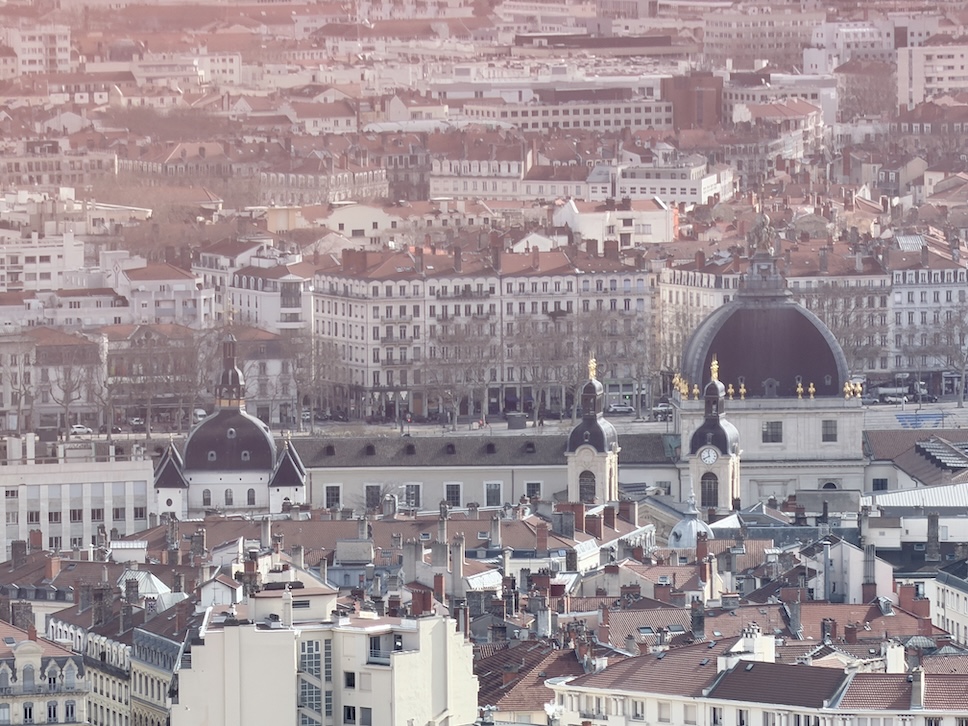
Hôtel-Dieu literally translates to “Hotel of God,” though it is more commonly understood as “Hospital of God.” Historically, this name was given to hospitals in France that were run by the Catholic Church during the Middle Ages to care for the poor and sick.
The Hôtel-Dieu de Lyon also falls into this category, as it was originally founded as a charitable hospital. Today, it has been remodeled into a 5-star luxury hotel operated by InterContinental.
While it sits along the Rhône River, the best view is from across the river, where you can truly admire the elegance of this historic and interesting building.
It’s fascinating to think that hospitals were once built with such beauty and care, even when serving the poor and sick. All for the glory of God, the creators of Lyon’s Hôtel-Dieu spared no effort in designing something truly majestic, a place of healing that was also a work of art.
There is also a chapel on site but unfortunately it was not open when we were there. However, from my quick search online, it seems as though they have still preserved the chapel and maintained its beauty.
Staying at the InterContinental Lyon – Hotel Dieu
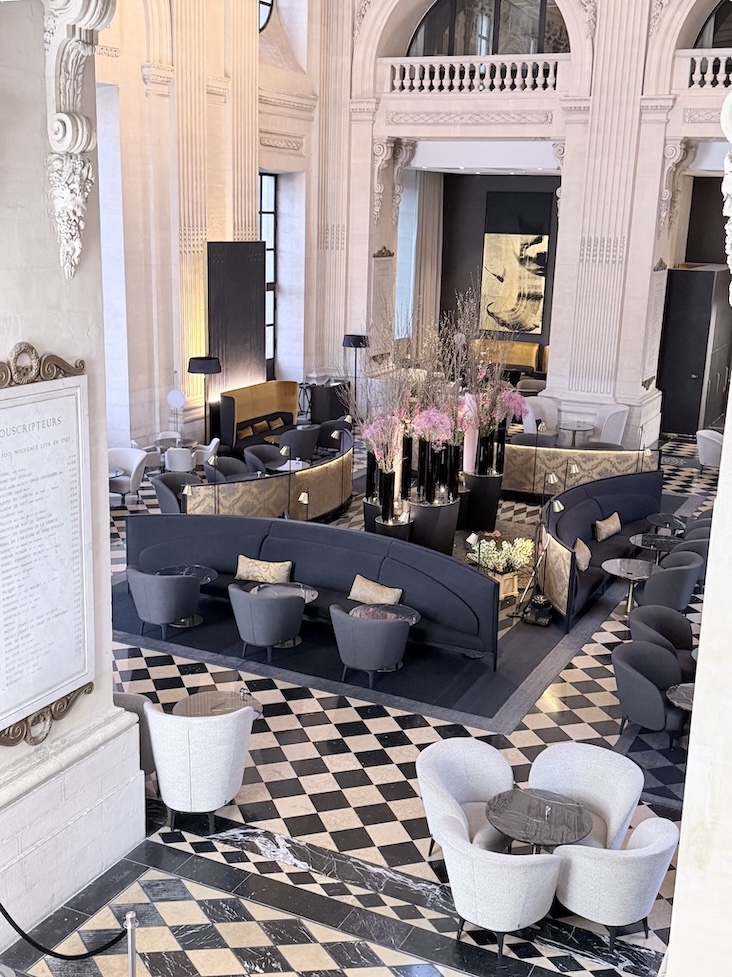
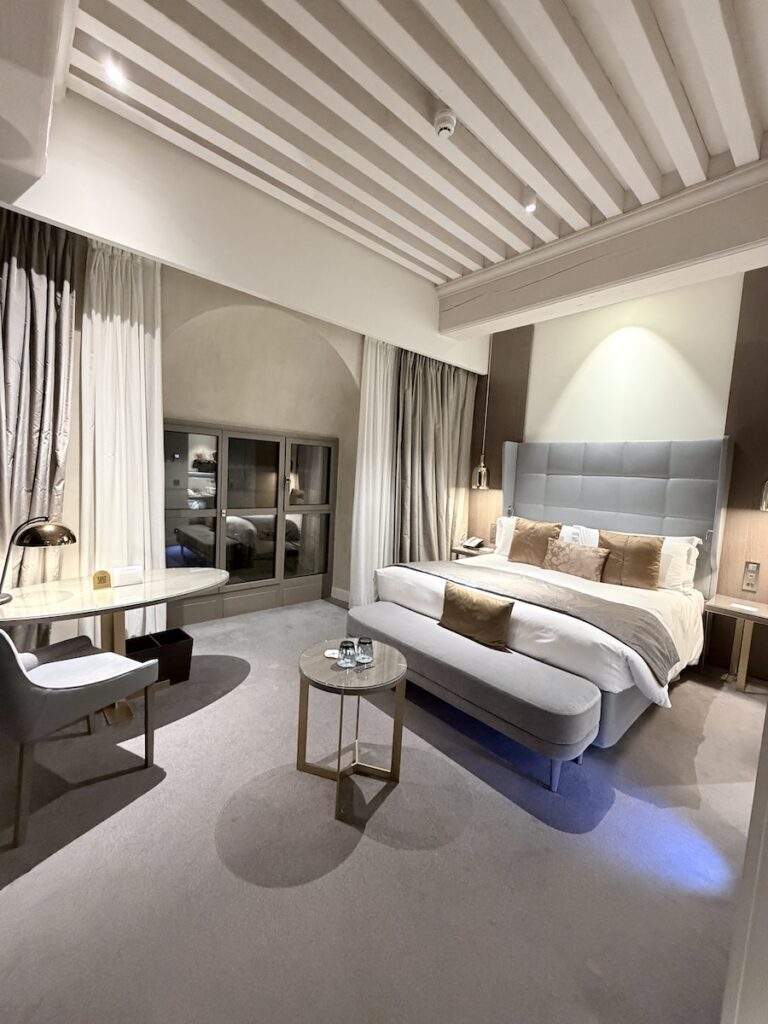
The hotel rooms themselves are comfortable and inviting, and the staff provides exceptional service. Even if you’re not staying at the hotel, it’s worth stopping by to visit the bar on the first floor, which won a prestigious award a few years ago. The restaurant, Épona, is also worth trying. We talk more about our food experience at Hotel Dieu Lyon here.
Surrounding the hotel but still within Hotel Dieu’s courtyards are boutiques and shops you can explore. Hotel guests may be offered a discount at certain shops such as at Victorinox, so if you’re staying at the hotel, don’t forget to ask for it.
St. Georges Catholic Church
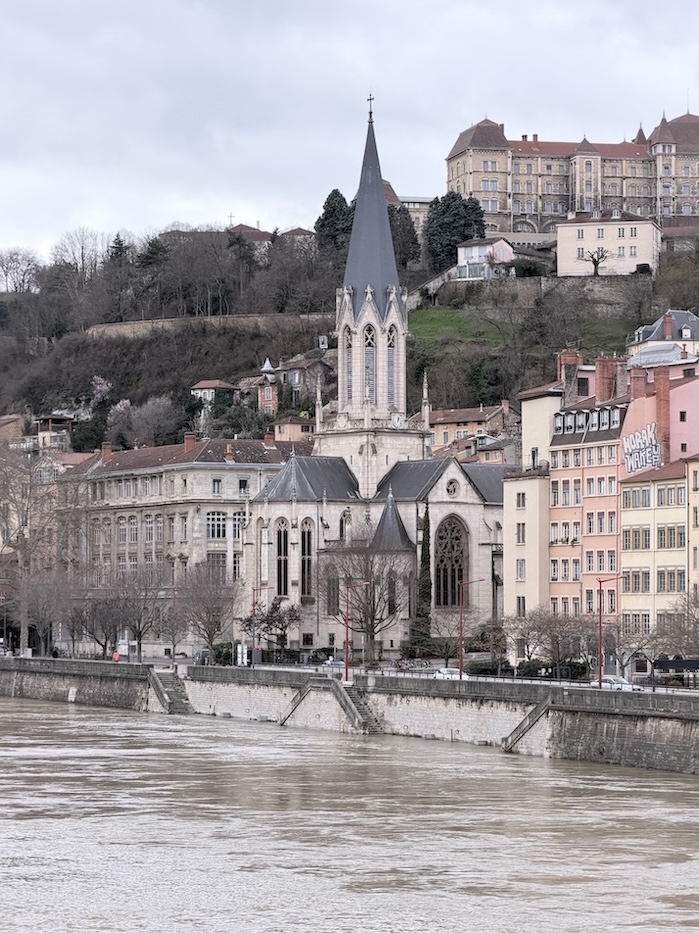
The other iconic church of Lyon, which sits along the Saône River is Église Saint-Georges de Lyon. We had the privilege of attending Mass on Ash Wednesday at this church.
St. Georges offers Mass in the Traditional Latin Rite only and is currently run by the Community of Missionaries of Divine Mercy. It had changed hands from the Fraternity of St. Peter to this current community, although the new FSSP parish in Lyon is not too far from this church.
The Mass we attended was beautiful and the church was packed to the brim that night despite it being a huge church. In the back was standing room only. It was very uplifting to see such a diverse parish with so many young adults and families.
The choir was also amazing with many young men and women volunteering their voices for the Holy Sacrifice of the Mass. You can read more about the order and find the schedule of their Masses here: https://www.eglisesaintgeorges.com/
Place des Terreaux
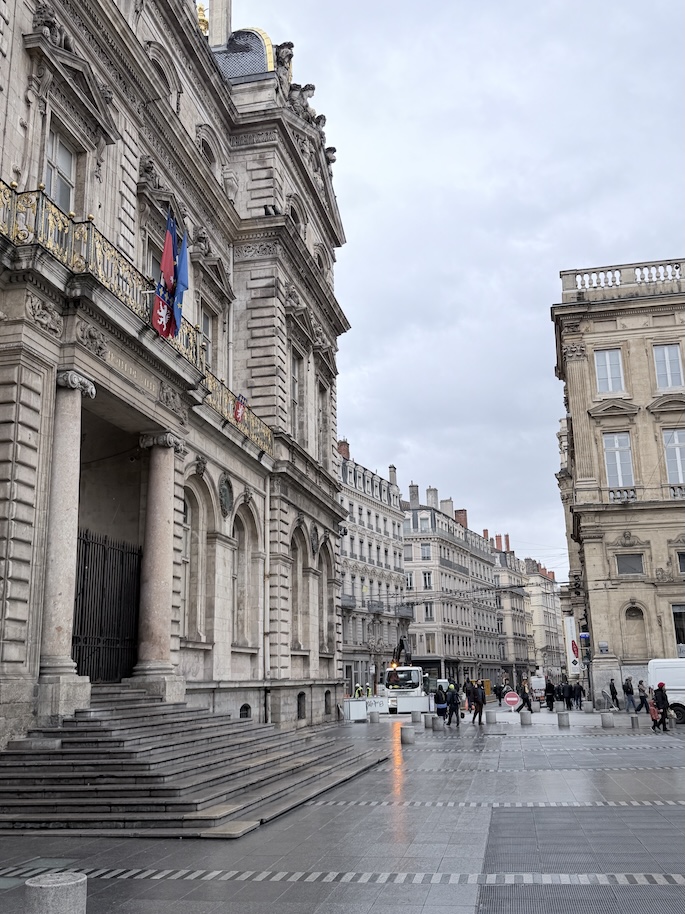
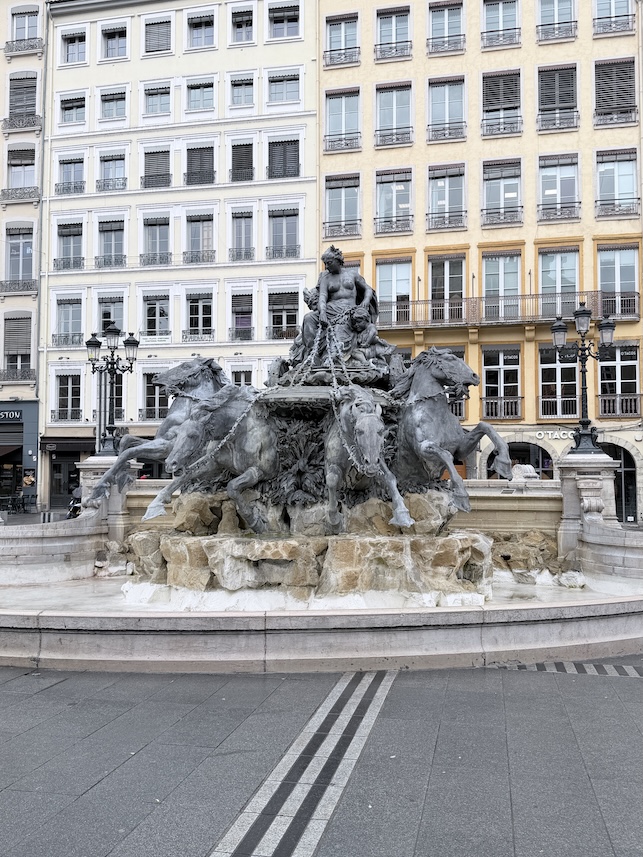
The Place des Terreaux is in the center of Lyon and is on the peninsula between the Rhône and Saône rivers. This plaza houses the famous Bartholdi Fountain, which has a unique history of initially being commissioned for the city of Bordeaux but when the offer fell through, Lyon purchased it instead and it became one of the city’s most iconic landmark.
Both the historic buildings of the Hôtel de Ville de Lyon (Lyon’s City Hall) as well as the Musée des Beaux-Arts (Museum of Fine Arts of Lyon) are adjacent to this plaza. These beautiful 17th century buildings surround this plaza making it another one of Lyon’s many Unesco World Heritage Site.
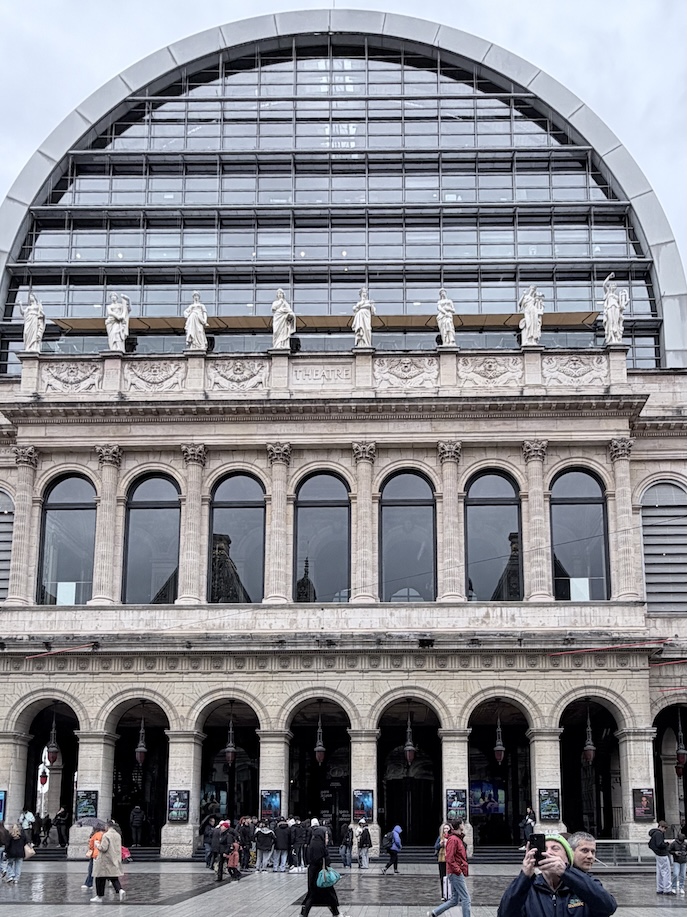
Across from the city hall on the other side of the side fronting the plaza is the Opéra National de Lyon, which is a neoclassical 19th century building that was redesigned in the late 1900s to add the glass dome. The floor space of the opera house was tripled during this redesign to accommodate the need for more space for the opera company.
On the 7th floor is Les Muses Restaurant. This restaurant offers a rooftop terrace that the public can go to to get sweeping views of the City Hall as well as the surrounding city. Along that terrace facing out toward the city are the 8 muses from Greek mythology.
Place des Jacobins
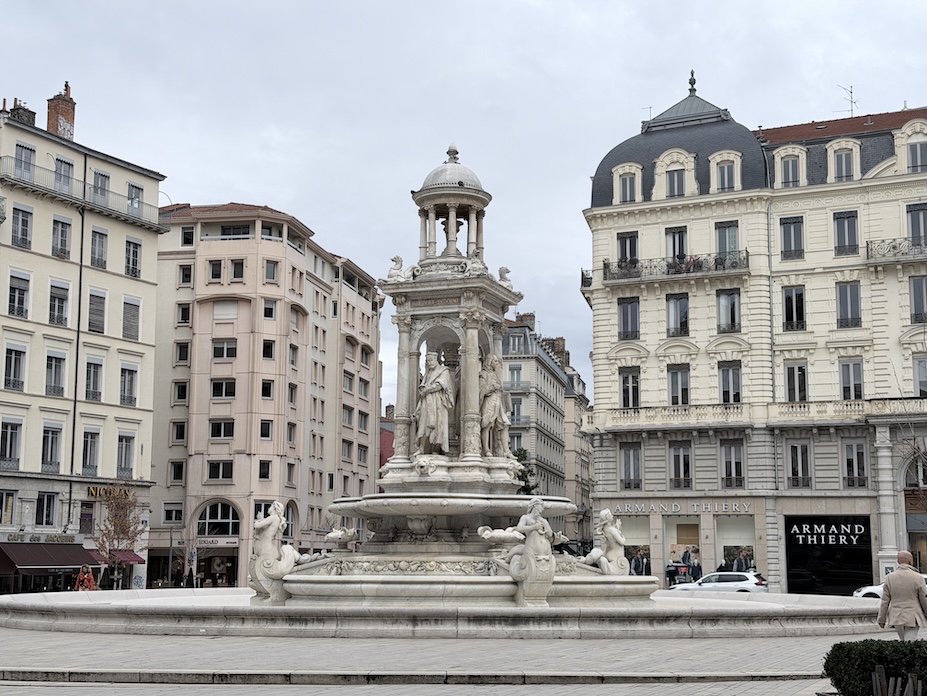
Right at the center of the convergence of twelve streets lies the Place des Jacobins. It takes its name from the Jacobin monks of the Dominican Order, who originally had a convent and church on the site. It’s always striking to see the richness of Catholic heritage throughout France—after all, it is the “eldest daughter of the Church.”
It’s similar in California, where many city names reflect Catholic influence from the Spanish missionaries. I never fully appreciated it until I moved away, but seeing it in France really brings that rich heritage to life.
This beautiful plaza immediately captures your attention, surrounded on all sides by elegant 19th-century buildings with Haussmann-inspired façades. At its center stands the Fountain of the Jacobins, featuring marble sculptures of four renowned local artists: Guillaume Coustou, Hippolyte Flandrin, Philibert de l’Orme, and Gérard Audran.
Today, it is a popular place for pedestrians to walk through and rest along the fountain and just people watch. Nearby is one of the famous Pralus chocolate shops worth checking out when in Lyon.
Our Lyon Bucket List:
- Jardin des Curiosités – A park donated by Montreal back in 2000 to commemorate the relationship of the two cities offers panoramic views of Lyon from Fourvière hill.
- Parc de la Tête d’Or – A large and beautiful public park with many sites to see such as a botanical garden, rose garden, a zoo, a lake, and many more sites worth visiting.
This park alone might take a few hours to go through so we will reserve it for our next visit. - Colline de la Croix Rousse – A hill known as “the hill the works” or “working hill” la croix-rousse refers to the district that had a history being home to thousands of weavers that worked in Lyon’s silk industry back in the 19th century. This is in contrast to Fourvière hill, which is known as “the hill that prays”.
Now it is popular for its unique and trendy culture featuring local boutiques and bohemian vibes. You can also can find “hidden streets” or traboules that silk workers used to transport fabric whenever it rained. - Basilica of Saint-Martin d’Ainay – This 11th-century Romanesque church was originally owned by the Benedictines and has a rich and fascinating history. Remarkably, it is one of the few churches in Lyon to survive the French Revolution largely intact, making it one of the city’s oldest churches. Today, it is recognized as part of Lyon’s UNESCO World Heritage Sites.
- Les Halles de Lyon Paul Bocuse – This is Lyon’s iconic covered market and a must-visit for anyone exploring the gastronomic capital of France. Named after legendary chef Paul Bocuse, it’s often called the “temple of gastronomy.”
Inside, over 50 vendors offer fresh fruits, artisan cheeses, charcuterie, seafood, and other fresh ingredients essential to Lyon’s culinary traditions. You can find local specialties like Salade Lyonnaise, alongside ingredients that make for a truly good meal, all perfectly paired with a glass of white wine.
Even if you’re not shopping to cook, it’s a lively place to stroll, sample flavors, and experience Lyon’s rich food culture firsthand. With products sourced from nearby regions, including the fertile Rhône valley and even the French Alps, this market showcases the very best of the region’s culinary bounty.
For the best experience, visit in the morning when the market is buzzing and the offerings are at their freshest.
From historic neighborhoods to world-famous cuisine, Lyon offers travelers a chance to experience some of the very best of France. Save this guide for your future trip and start planning your visit to one of the country’s most fascinating destinations. From an American’s perspective, Lyon is a highly under-rated French city that is worth adding to your next trip to France.
If you’ve been or are planning to, let us know of other places worth visiting in the beautiful city of Lyon, France.