
Unique Foods You Need to Try the Next Time You’re in France
Growing up, France was always my dream destination. There are so many beautiful things to see and experiences to try there. And like all beautiful things, it naturally draws us in.
I wanted to see it all — from the architecture, to the art, to the rich Catholic history, with France being the Eldest Daughter of the Church. But as a foodie, I was especially excited to try authentic French cuisine!

We go back to France at least once a year and every time we go, I discover a new and unique dish. I’ve had the pleasure of eating the everyday home cooked French meals as well as all the local specialties from different regions.
Each time we go back, we make a point to travel somewhere new and try the local traditional dishes there.
We’re all familiar with famous french foods like steak frites, croque monsieur, boeuf bourguignon, and of course, the endless array of pastries. While those are undeniably delicious, I’ve put together a list of lesser-known dishes that I believe are also worth trying if you’re traveling to France.
1. Moules Frites – Paris & Northern France

Originally a popular Belgian dish, moules frites quickly found its place in French cuisine and became a beloved classic, especially in Paris and the northern regions. The dish features steamed mussels served in a sauce of your choice, accompanied by a generous side of crispy, piping hot French fries.
Restaurant menus offer many sauce options, from light white wine broths (à la marinière) to rich, indulgent varieties like garlic butter (à la crème or provençale) or Roquefort. A great moules dish depends on a flavorful sauce made with high-quality ingredients, as it’s truly the heart of the meal.
And the cherry on top? Those perfectly golden fries on the side. For the best experience, skip the chains and try moules frites at a well-established French restaurant.
2. Pâté en Croûte – Northeastern France (Champagne/Alsace)
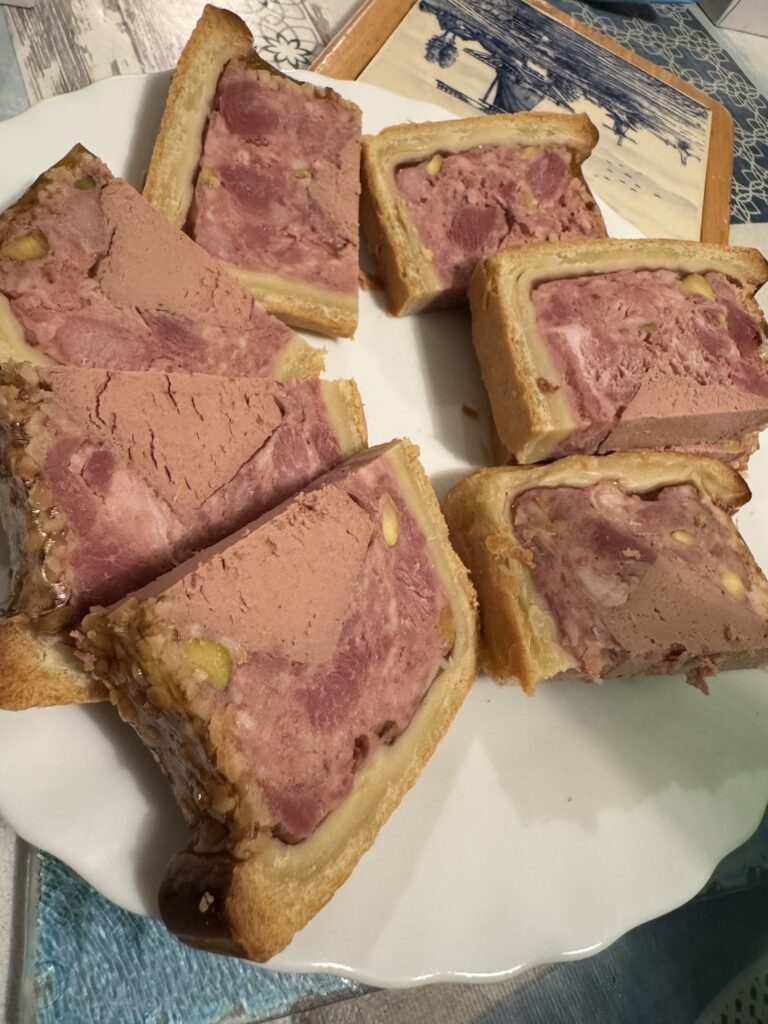
Ironically, I first tried this dish not in France, but at a French bakery in San Francisco. (You can read more about that experience here.) It was so delicious that ever since then, I make it a point to get some whenever we’re in France.
You’ll typically find pâté en croûte in the charcuterie section of a French grocery store, right alongside other prepared meats and dishes. The name literally means “pâté in crust” — and that’s exactly what it is. This version includes a mixture of meats along with other ingredients like fruits or vegetables, all baked inside a golden crust. Crucially, a layer of savory gelée (aspic) is poured inside after baking to keep the filling moist and bind the ingredients together.
That combination gives it a wonderful mix of textures and flavors. It’s a rich, savory dish that feels both rustic and refined. My favorite version includes duck pâté with bits of dried fruit and nuts — figs and pistachios, in particular.
We love serving it as an appetizer for guests or packing it for a picnic. Since it’s served cold, it travels well and tastes just as good outdoors.
3. Hachis Parmentier – Comfort Food Popular Throughout France
Hachis parmentier is a classic French dish that’s simple, hearty, and perfect for a quick yet satisfying dinner. You don’t need to visit a restaurant to enjoy it — you can easily make it at home with ingredients you probably already have on hand.
Think of it as the French version of shepherd’s pie: layers of seasoned ground beef topped with creamy mashed potatoes. The mashed potatoes are usually mixed with milk and Emmental or Gruyère cheese for extra richness.
To prepare, cook the ground beef and make the mashed potatoes, then layer them however you like in a casserole dish. Bake until the top turns golden brown and bubbly. It pairs well with any side dish you prefer.
The dish is named after Antoine-Augustin Parmentier, a French pharmacist who didn’t invent hachis parmentier but played a crucial role in popularizing the potato in France. At a time when potatoes were wrongly feared to cause disease, Parmentier proved they were safe and nutritious, helping to combat food shortages in the 18th century.
4. Cassoulet – Southwest France (Languedoc Region)
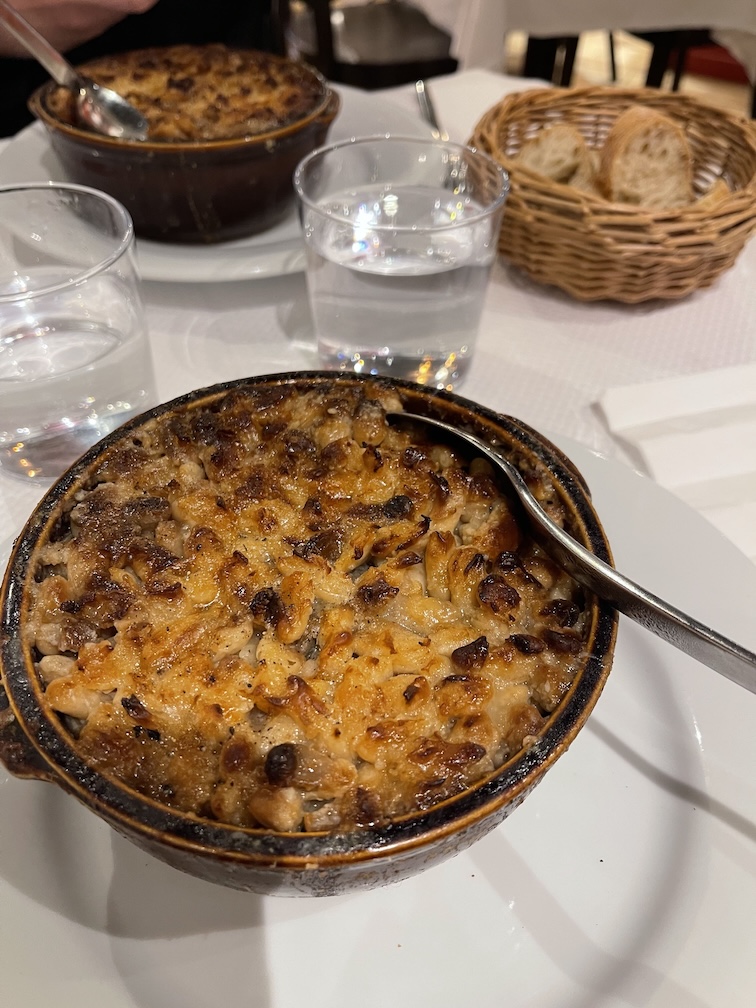
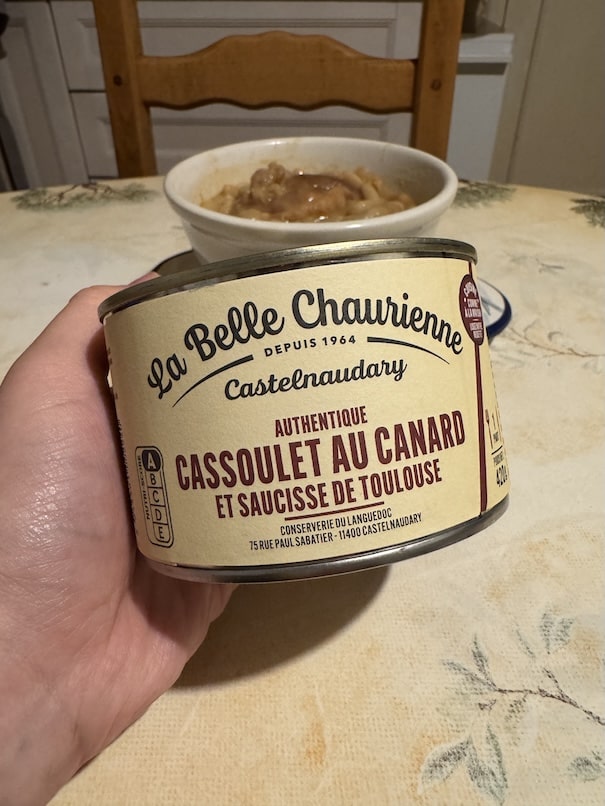
This dish from southern France is hands down my absolute favorite French meal. Cassoulet is a hearty meat and bean stew, typically enjoyed as a main course during the colder winter months.
You can often find canned and jarred versions in French grocery stores, especially around the holiday season when it becomes particularly popular. During that time, you’ll discover many variations—some made with only duck, others with sausage, or a combination of meats. We even spotted cassoulet all over grocery stores in Tahiti when we visited in December.
Traditionally, cassoulet is cooked low and slow for hours in an earthenware pot called a cassole or toupin, which it’s served in. White cannellini beans are stewed alongside pork belly, Toulouse sausages, and duck confit, though other versions exist.
The final result of this slow cooking is a thick, rich, and savory stew, distinguished by the irresistible golden-brown crust that forms on its surface, which is broken and reformed multiple times during the cooking process. This classic combination happens to be my favorite.
The meat is hearty, and the beans become creamy without the need for any dairy. If you’re in France, I highly recommend trying cassoulet in Carcassonne, Castelnaudary, or Toulouse—the traditional homes of this iconic dish. But if traveling there isn’t on the cards, the canned and jarred versions you find in grocery stores are surprisingly delicious and definitely worth a try.
5. Duck Dishes – Magret de Canard / Canard à l’Orange/Confit de Canard – French Classics

While Magret de Canard is an authentic specialty of the Southwest of France, Canard à l’orange is a classic of French Haute Cuisine, served across the entire country.
Magret de canard features the duck breast, typically pan-seared to your preferred doneness, similar to cooking a steak. Canard à l’orange is a classic French dish where duck (often the breast or sometimes the whole bird) is cooked with a sweet and tangy orange sauce that perfectly balances the rich meat.
Duck is widely available in French grocery stores, and the ducks raised in France are often from special breeds known for their flavorful, plump meat—resulting in larger duck breasts than those commonly found in the US.
Although I haven’t quite mastered cooking duck myself, I love ordering magret de canard when I’m in France, usually paired with crispy fries and a fresh side salad. I also found myself craving and ordering it often while in Tahiti.
If you get the chance, don’t miss trying confit de canard—another classic duck dish full of rich flavor.

6. Brandade de Morue (Salted Cod Dish) – Southern France (Provence & Languedoc Region)
Brandade de morue is a comforting dish made from salted cod, milk or cream, and potatoes. The salted cod is preserved by drying and salting, which gives it a firmer texture and a rich salty umami flavor that elevates any dish it’s used in.
Salted cod is common in French grocery stores but much harder to find here in the U.S. I’ve been trying to track some down to recreate this dish at home, but haven’t had any luck yet.
To make brandade, the cod, cream, and potatoes are whipped together into a spread. It’s like a mashed potatoes with white flakey fish mixed in.
Like mashed potatoes, it can be customized to your preference, either chunky with potato bits or completely smooth. The mixture is then baked until a golden, delicious crust forms on top, and served warm.
This simple yet flavorful dish pairs perfectly with a fresh baguette. I’ve often seen it served at rest-stop restaurants in France, where it’s a popular choice among locals for lunch.
My favorite versions are homemade, where the ratio of fish to potatoes is higher and the potatoes are mashed smooth, creating a rich, satisfying texture.
7. Toulouse Sausage – Occitanie
Toulouse sausage is always one of the things we make sure to eat at least once every time we return to France. This simple pork sausage is our absolute favorite, and we always wonder why it isn’t more popular or better known in the U.S., like Italian sausage or bratwurst—maybe because the ingredients are so straightforward.
A staple of traditional French food, this sausage is featured in recipes like cassoulet, saucisse de Toulouse aux lentilles (sausage with lentils), and in feuilleté (puff pastry). You can check out our recipe for making your own feuilleté [here].
The traditional recipe for Toulouse sausage calls for just ground pork, salt, and black pepper. It’s delicious when baked or pan-cooked and pairs well with almost any side. Our favorites include a fresh salad and rösti (a Swiss potato dish similar to hash browns), with Dijon mustard for dipping.
You can easily find Toulouse sausages at great prices in French grocery stores or local butcher shops. Here in the United States however, they’re hard to find and usually expensive when available.
We had so much trouble sourcing them that we started making our own. I have since learned how to make it ourselves and will be sharing it here shortly. Toulouse sausage is a perfect sausage for beginners, and ours turned out great!
8. Bouillabaisse – Provence-Alpes-Côte d’Azur
Bouillabaisse is a classic seafood stew originating from the southern coast of France, especially around Marseille.
This hearty dish features a mix of seafood—fish, shellfish, and squid—simmered in a flavorful fish broth with aromatic herbs and spices.
Traditionally, bouillabaisse was a practical way for fishermen to use up leftover or unsellable seafood, resulting in a rich, savory soup full of varied textures and flavors.
A key ingredient is saffron, which gives the stew its signature golden-red color and distinctive aroma. Bouillabaisse is typically served with toasted crusty bread, often rubbed with garlic, and garnished with fresh parsley.
9. Socca Crepes (Chickpea Crepes) – Provence-Alpes-Côte d’Azur (Nice)

Socca crepes are thin, flat, and round like regular crepes, but they’re made from chickpea flour and cooked in olive oil. They’re a fantastic option for those who are gluten- or dairy-sensitive.
Traditionally, socca is baked in a large wood-fired oven, which gives it a unique crispness and slightly smoky flavor. Once cooked, it’s quickly cut into pieces and seasoned with a sprinkle of black pepper before being served.
These crepes have a subtle, nutty flavor and a crisp exterior. They’re a popular street food in the south of France, especially in Nice, where they originated. You’ll often find socca made fresh and served at local markets.
You can enjoy them plain or add your favorite toppings, just like you would with a traditional savory crepe.
10. Ratatouille – Provence-Alpes-Côte d’Azur
When one thinks about classic French food, ratatouille usually comes to mind. It is a southern French vegetable dish made famous by Remy the rat in the movie Ratatouille. Ever since I saw the film as a kid, I’ve been curious about how it actually tastes. It’s not easy to find a restaurant serving it here in the U.S., but my husband often makes it in the summer.
This dish was a staple growing up for my husband. It features summer vegetables like tomatoes, eggplant, and zucchini, all cooked slowly in olive oil. These were the same vegetables his grandparents grew in their garden. He told me how they would make huge batches of ratatouille during the summer when everything was in season, then preserve it in jars to enjoy throughout the year.
Most traditional ratatouille dishes don’t look like the neatly stacked rounds you see in the movie. That version more closely resembles Tian Provençal, another Provençal dish made by layering thin slices of vegetables in a baking dish and roasting them. Ratatouille, on the other hand, is more of a rustic vegetable stew, with cubed or sliced vegetables simmered in a rich tomato sauce.
A generous addition of Herbes de Provence and alliums gives it a wonderfully aromatic flavor. Ratatouille is healthy, hearty, and pairs perfectly as a side with meat and rice.
11. Crêpes – Brittany & Normandy


Of all traditional French dishes, crêpes are the most famous, and for good reason. Every time we’re in France, we make it a point to go out for crêpes at least once. There’s just no beating the quality and flavor of those made by the many crêperies found throughout the country.
While each region has its own take, incorporating its local produce and ingredients, the best crêpes, in our opinion, come from Brittany and Normandy.
In France, buckwheat crêpes (galettes) are made perfectly thin and crisp, making them ideal for savory fillings. We’ve yet to master the art of making buckwheat crêpes ourselves, so we always treat ourselves to them when we’re visiting.
There are always so many delicious options to choose from. Classic savory crêpes often include combinations of ham, cheese, vegetables, and egg. If you’re feeling adventurous, try ones filled with seafood like fish or noix de Saint-Jacques (scallops).
After that, it’s practically required to follow up with a sweet crêpe for dessert. The combinations are endless—ice cream, fruits, chocolate, whipped cream, and more.
Some iconic sweet options include crêpes Suzette, served with a warm orange-butter sauce (often flambéed), and crêpe au sucre, a simple crêpe with just sugar and a squeeze of lemon juice.
There’s even an entire street near Montparnasse in Paris that’s famous for having over a dozen crêperies lined on both sides: Rue du Montparnasse. It’s a must-visit if you’re in the area.
Our favorite so far is a little crêperie we stumbled upon in Montmartre called Comptoir Breizh.
And don’t forget: when enjoying crêpes in France, pair them with a cold glass of cidre (French cider). Traditionally, cidre is served in a small, wide, handleless earthenware bowl called a bolée – like the one in the picture above.
12. Salade Landaise – Nouvelle-Aquitaine


This salad hails from the Landes region in southwestern France, an area renowned for its duck production. You’ll often spot it on menus throughout the southern regions of France, especially in summer.
I find myself craving it on hot days, it’s light and refreshing, yet still hearty thanks to its signature duck components. The base is usually a mix of fresh greens, lettuce, and seasonal vegetables like tomatoes. Slices of hard-boiled eggs are often neatly arranged around the rim of the plate.
What sets this salad apart is the generous topping of duck: tender duck gizzards, smoked duck breast, and often a slice of foie gras. The whole dish is tied together with a zesty vinaigrette, which adds brightness and balance.
It’s a perfect example of how French cuisine combines richness and freshness in one dish, offering a delicious variety of textures and flavors.
13. Boudin Noir – France (Regional Variations)
It seems like every culture has its own version of blood sausage, and in France, that version is called Boudin Noir.
Because I grew up making and eating Vietnamese blood sausage, I wasn’t intimidated by this dish, even though its appearance can be a bit daunting at first. French boudin noir is made from a blend of pork blood, fat, and meat, mixed with herbs and spices.
I personally really enjoy it, especially when it’s served with homemade baked apples. The sweet and savory combination works incredibly well together.
The sausage has a nice snap from the casing, while the inside is smooth, well-blended, and rich in flavor. You can find boudin noir in almost every French grocery store, typically in the charcuterie or butcher section. Just bake it alongside some apples in the oven, and you’ve got yourself an easy, authentic French meal.
While Boudin Noir is found everywhere, the most renowned preparation is often associated with Normandy. There are also regional versions worth trying:
- Boudin Béarnais, from the Béarn region, often includes leeks and is lighter in texture.
- Boudin Antillais, from the French Caribbean, is a spicier, more aromatic version seasoned with chili, green onions, thyme, and local spices. Often served warm at street markets, it’s commonly paired with accras de morue—crispy salt cod fritters—for a bold and flavorful Antillean starter. If you’re ever in Martinique or Guadeloupe, don’t miss the chance to try this spicy and delicious version. You can also find boudin antillais in mainland France, especially in cities with Caribbean communities like Paris and Marseille.
14. Oil Fondue (Fondue Bourguignonne) – Burgundy
This fun dish is similar to cheese fondue, but instead of melted cheese, the pot is filled with hot oil used to cook various meats or seafood. You then enjoy the cooked pieces with sides like bread and vegetables—steamed potatoes, carrots, and broccoli are popular choices.
A variety of dipping sauces are usually set on the table, allowing everyone to choose their favorites. During the holidays, these sauces often come in convenient kits. Some of the most popular sauces include poivre (pepper) sauce, which is rich and creamy with a bold, peppery kick that perfectly complements the meat; béarnaise, a buttery and tangy sauce flavored with fresh herbs like tarragon that balance the dish’s richness; and the sharp, tangy, and slightly spicy mustard of Dijon (moutarde de Dijon), which adds a zesty punch.
Other common sauces include aioli, tartar sauce, and American sauce—a creamy, tangy blend of mayonnaise, ketchup, and spices that adds a slightly sweet and zesty kick.
One of the best things about Fondue bourguignonne is that it is typically enjoyed during special occasions or holidays with family and friends, because it is a simple meal that caters to many tastes.
15. Soupe de Poisson – Provence

Soupe de Poisson (Fish Soup) is a staple of Provençal cuisine and French coastal regions. This savory soup bursts with rich umami flavor and a warm, earthy red color, achieved by slowly simmering fish bones and heads with tomatoes, onions, garlic, and aromatic herbs. It has a wonderfully thick, bisque-like texture and can be found bottled in grocery stores across France.
For an authentic experience, this soup is typically served with croutons (toasted bread), a dollop of crème fraîche or rouille (a spicy, garlicky saffron mayonnaise), and often a sprinkle of grated cheese, adding depth and richness to this comforting meal.

16. Corsican Pork Stew (Stufatu) – Corsica

When visiting Corsica, the one dish locals insist you try is their traditional pork stew, a true specialty of the island. This hearty, slow-cooked dish is often made using meat from the native Corsican wild boar or the island’s flavorful mountain pigs (porcu nustrale).
The meat simmers for hours in a rich sauce, fragrant with local herbs like marjoram and myrtle. Typically served alongside creamy polenta—a clear sign of the island’s Italian influence—this stew is full of character and perfectly reflects Corsica’s wild, mountainous history.
17. Seiche à la Rouille – Occitanie (Sète)
Seiche à la Rouille (Cuttlefish in Rouille Sauce) is a culinary emblem of the French Mediterranean coast, specifically the port town of Sète in the Occitanie region. This dish features tender pieces of cuttlefish simmered slowly in a rich, complex sauce made from tomatoes, white wine, aromatics like garlic and onion, and frequently saffron for color.
The unique and savory depth of the sauce comes from it being thickened—or “tied”—at the end of cooking with a traditional, egg-yolk-based aïoli (garlic mayonnaise).
The name rouille, meaning “rust,” refers to the sauce’s distinctive golden-red hue. It is often served with rice, pasta, or potatoes, and is celebrated as a rustic, hearty example of French cuisine du soleil (sun cuisine).
18. French Tapenade – Provence
Tapenade, a classic spread from Provence in southern France, comes in both green and black versions, depending on the type of olives used. The black tapenade is made from dark olives like Niçoise, while the green version uses green olives such as those from Castelvetrano.
Both versions blend olives with capers, anchovies, and olive oil to create a rich, salty, and tangy spread. Traditionally enjoyed as an appetizer on crusty bread or crackers, tapenade perfectly captures the vibrant Mediterranean flavors of the region and is a beloved staple in Provençal cuisine. On a hot day, enjoy this with a glass of wine such as a rosé!
These unique dishes are just the beginning— for a country renowned for its cuisine, the culinary treasures are endless.

Let us know what your favorite dish from France is – especially if it’s missing from this list. We’d love to give it a try!
Sincerely,
A &D
Pin this before your next trip to France!

