
100% Whole Wheat – Cinnamon Swirl Raisin Sourdough Bread Recipe

This delicious whole wheat sourdough cinnamon raisin swirl recipe makes for a perfect breakfast toast with butter or even as a hearty dessert after a meal. It is sweet, nutty, and earthy from the blend of whole wheat, spices, and raisins.
This recipe is moist and soft. It is not dry and crumbly like you’d expect a whole wheat recipe to taste like. It incorporates a bit adding hot water to flour, kind of like the tangzhong method. However in this case, rather than cooking a roux over the stove, we’re pouring boiling water onto a portion of the flour.
This is the key to have a moist and soft wheat bread.

This recipe is reminiscent of the raisin bread I grew up eating from the grocery store. However, this cinnamon swirl bread delivers all the fiber of whole wheat, the benefits of naturally fermented dough, and none of the added preservatives.
This recipe makes the perfect sweet treat and we like to have some slices stocked in the freezer for when the sweet tooth kicks in.
Ingredients

- Sourdough Starter Levain: Make this the night before you plan on making your bread dough. You’d want to set aside at least 12 hours for the levain to be nice and bubbly.
During the winter I sometimes have to make it a whole 24 hours ahead of time since my house runs cold. Your starter levain could be made from whole wheat or all purpose flour. I’ve done both and they’ve worked just fine. - Soaked Raisins: Soaking the raisins prevents them from drawing moisture out of the bread dough, which can lead to a dry loaf. There are several ways to soak raisins: they can be soaked in cold water overnight for at least 8 hours, or, if you forgot to plan ahead (guilty!), soaked in warm water for at least 30 minutes.
Be sure to allow enough time to drain and pat the raisins dry before adding them to the dough. Excess water can make the dough too wet. I love adding a splash of vanilla for more depth of flavor. - Cinnamon Sugar Mixture: The key here is to make sure the butter is softened but not melted. You want it soft enough to mix in the cinnamon and sugar and also soft enough to spread across your dough without dragging and ripping it.


How to Make Whole Wheat Cinnamon Raisin Swirl Bread
Make the sourdough bread using my whole wheat sourdough bread recipe here. It includes a scalding method (similar to tangzhong) that ensures a soft and moist whole wheat sourdough bread. Unlike many whole wheat breads, this one is not dry or crumbly. In that post, I go into more detail about the scalding method and how it works.

Soaking Raisins
Soak the raisins in warm water and some vanilla extract for at least 30 minutes. This prevents them from absorbing moisture from the sourdough bread dough.
Soaking the raisins before to adding them allows you to use any sourdough bread recipe you’re already familiar with, without having to adjust its moisture content. I find it easier to keep the dough recipe I know by heart and just add in soaked raisins.
Cinnamon Sugar Spread/Paste
Once butter is soft enough, mix the brown sugar, cinnamon, and bread flour together until it creates a smooth spread. Adding a bit of bread flour helps prevent the swirl from separating or creating a gummy gap inside the loaf.
This ensures the swirl remains more intact and defined instead of melting into a syrup and disappearing into the dough.
Lamination of Cinnamon Sugar Swirl

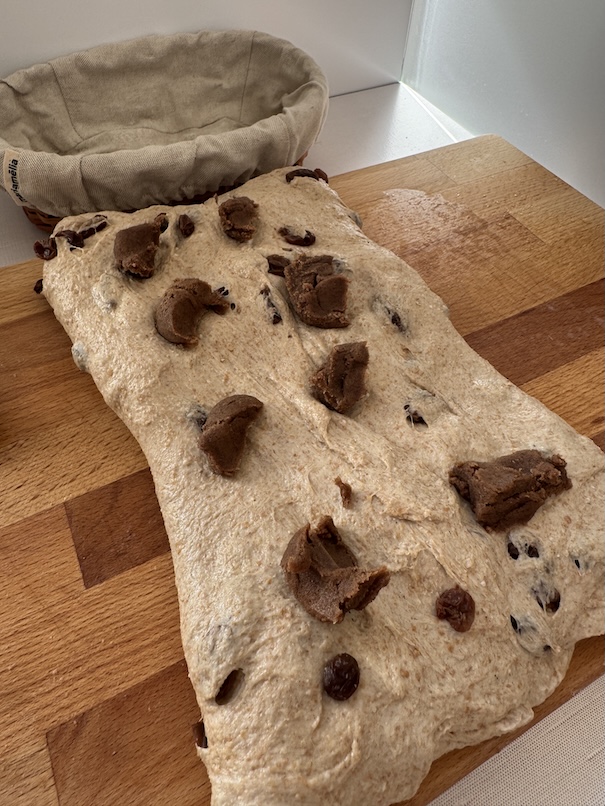
After bulk fermentation is complete, gently pull the dough into a rectangle. I find you don’t need to be exactly precise on the size but at least 12”x8” works well.
Gently spread the paste down the middle ⅓ of the dough. Dollop the paste throughout the section you are going to spread it on to make spreading it evenly easier and with less chances of tearing the dough.
Once done, fold the left and right side of the dough together into the center and pinch the seam closed. At this point, I like to place my banneton at the top of my dough to see how much I should fold it in together to best fit my banneton.
Spread the rest of the cinnamon sugar paste down the entire length of this folded dough leaving a couple of centimeters on the edges. Place the mixture in dollops to make it easier to spread.
Once done, start rolling the dough from the top down using a bench scraper into a tight log. If you find it sticking to the counter, spray the bench scraper a bit to make it easier as you roll.
When you get down to the last ¼ of the roll, stop rolling from the top and grab the bottom edge and pull it up over to complete the roll. Pull it tight enough to create tension without tearing the dough.



Since you won’t be building surface tension using the push and pull method, this folding and rolling method is how you will do it for this recipe. Pinch the ends of the roll to seal in all inclusions.
Once complete, flip it into a floured banneton with the seam side up and place it in the fridge for cold fermentation. The next day, it is ready to be scored and baked and then you’ll have yourself a delicious whole wheat dessert bread.


Recipe

Whole Wheat Cinnamon Raisin Swirl Bread Recipe
Ingredients
100g Sourdough Starter Levain
- 50 g whole hard wheat
- 50 g water
- 5-10 g starter – could be starter made from whole wheat or all purpose flour
Sourdough Bread
- 500 g Whole Wheat flour – hard red, hard white, or combination of the two whole grains works just fine
- 400 g Water
- 10 g Salt
Cinnamon Sugar Mixture
- 4 tbsp softened room temperature butter
- 1 tbsp cinnamon
- 50 g or 4 tbsp of brown sugar
- 2 tbsp of bread flour
- Pinch of salt if using unsalted butter
Soaked Raisins
- 100 g raisins
- 1 tsp vanilla extract
- 350 g warm water
Instructions
Making the Levain
- Make levain at least 12 hours prior to starting
- Mix 50g flour 50g water and 5g of sourdough starter (when it’s colder or if you have non-active sourdough starter use 10g)
Making the Dough
- Autolyze your ingredients
- In a bowl set aside 100g of flour
- Add 100g of boiling water to it from a kettle, cover and let sit for 30 minutes
- In a large mixing bowl, mix 400g flour with 300g water, cover and let sit for 30 minutes
- After 30 minutes, mix the scalded flour, autolyzed flour, levain, and salt together with a dough whisk.
- Once incorporated enough, switch to using your hand or any mixer using a dough hook.
- If using hands, just knead it however you like. Go to town on it.
- Mix and knead for 5-6 minutes until the dough is smooth and elastic – this will develop the gluten in your dough and help it rise and form its shape later
- If using a dough mixer, let it mix with the dough hook for 10-15 minutes on the medium-low setting (About a 4 for Kitchen Aid).
Adding in the Soaked Raisins
- Drain and pat dry the soaked raisins. You do not need to squeeze out excess water.
- During the first set of stretch and fold I add in half of the raisins.
- 30 minutes later, add in the remainder of the raisins during the second stretch and fold.
Bulk Fermentation
- Cover with a damp towel or airtight lid to let the dough rise without drying out.
- After 2 sets of stretch and folds, do 2 more coil folds 30 minutes apart
- I switch to coil folds to preserve the air bubbles that have formed during the fermentation process.
- Bulk ferment for 4-6 hours until the dough looks 30-40% larger in size
Shaping and Lamination of Cinnamon Swirl
- Once bulk fermentation is completed, pour the dough with raisin inclusions out your counter. It really helps if your work surfaces are moist to keep the dough from sticking.
- Stretch the dough into at least a 12”x8” rectangle. Doesn’t necessarily need to be precise.
- Spread half of the cinnamon sugar paste in the middle third of the dough rectangle.
- Fold the right side and left side dough in to meet at the center. Pinch to seal the seams.
- Here is where I like to fold the dough into the size of my banneton.
- Spread the remaining half of the cinnamon sugar paste onto the center of the dough.
- Start rolling the dough from the top down using a bench scraper.
- When you get towards the bottom quarter of the dough while rolling, stop rolling from the top and pull the bottom seam over to complete the roll and to create tension.
- Seal the ends by pinching in the seams to ensure no cinnamon sugar spills out.
Cold Fermentation
- Shape dough and then place in a banneton seam side up in the fridge for at least 12 hours.
Baking
- Preheat the oven to 450 degrees fahrenheit with a dutch oven inside for at least 30 minutes.
- Flip the sourdough over onto parchment paper or a bread mat.
- Score sourdough with a single score. I find that scoring intricate designs with a lamination always results in the filling spilling out more so I just do a single big score along the dough.
- Place dough into your baking vessel.
- Spray the dough with water or add in ice cubes under the parchment paper.
- Bake for 30 minutes with the dough covered for 30 minutes and then remove the cover for the remaining 12 minutes.
Cooling and Slicing
- Let the bread cool for at least an hour on a wire rack before slicing into it.
- Spread some salted butter on top and enjoy!
Storage Tips
- If eaten within 3 days, leave it at room temperature in your vessel of choice. I love using a cloth bread bag. Other popular ways I’ve seen other people store their sourdough bread has been in a cake dome or wrapped in a beeswax cloth.
- If it will take you longer to eat it, slice up the bread and then freeze it with a small piece of parchment paper placed between each slice. This way you’re able to easily take out a few at a time when you are ready to eat it. Just toast it up in the toaster or oven and it’ll taste as good as the day it came out of the oven.
Notes/Tips
- I’ve found that during the winter, I have to use a lot more flour than this recipe calls for here in my cold pacific northwest kitchen. If you find that to be the case, add 10g of flour at a time until the dough is no longer too sticky to handle. A bit of stickiness is fine.
- During the winter, I have to let my dough rise for a lot longer. Almost double the amount of time in this recipe. If your kitchen is cold or you live in a colder climate. I suggest you adjust the timing of when to start to accommodate the temperature.
- And of course, the case is vice versa during the summer.
- The more you make sourdough the better you will get a feel of what the dough should feel like and adjust according to the seasons and to the temperature in your own kitchen. However, this cinnamon raisin bread recipe is a great base to start from.